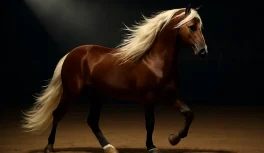
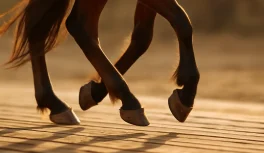
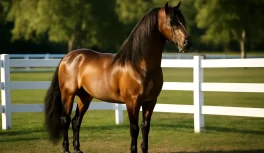
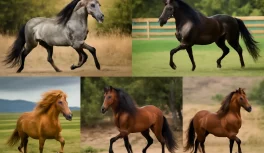
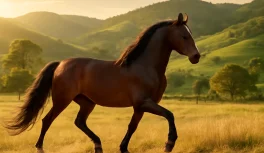
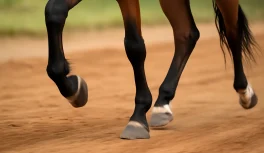
There is a genetic thread that connects the steppes of Arabia, the fields of the Iberian Peninsula, and the tropical islands of the Caribbean — and it runs through the hooves of one of the most distinctive horse breeds in the world. The origin of the Paso Fino horse doesn’t begin in the Americas. It begins centuries earlier, in the crossbreedings that shaped medieval Iberian horses, and arrives in the New World aboard Columbus’s ships in the late fifteenth century. What happened next is one of the most fascinating stories in equine history: how a breed was forged by geographic isolation, by the practical needs of colonial settlers, and by centuries of deliberate selection.
Understanding the origin of the Paso Fino is understanding why its gait is unique in the world — and why no attempt to artificially replicate that gait in other breeds has ever produced the same result.
The Iberian Ancestors: Jennets, Barbs, and Andalusians
The story begins in the eighth-century Iberian Peninsula, when the Moorish invasion brought Barb and Arabian horses that crossed with local equine populations. The result was a set of Spanish breeds characterized by two unusual traits: Mediterranean beauty and natural lateral gaits.
The most important ancestor for the Paso Fino was the now-extinct breed called the Spanish Jennet (or Iberian Jennet). Jennets were medium-sized, refined, exceptionally agile horses — naturally amblers, meaning they were genetic carriers of the lateral four-beat gait. During the Spanish Reconquista and subsequent centuries, Jennets were used for light cavalry, hunting, and long-distance travel — and the smoothness of their gait was celebrated in medieval chronicles.
Beyond the Jennets, the Paso Fino’s formation also drew from:
The Andalusian (ancestor of today’s PRE — Pura Raza Española): responsible for elegance, the arched neck, and ease of collection.
The North African Barb: responsible for endurance, metabolic efficiency, and aspects of the gait.
The Arabian: contributing refinement, speed, and bone durability.
When Columbus prepared his second voyage to the New World in 1493, he chose Spanish horses — likely Andalusians and Jennets — to send to the colonies. They were the finest war and working horses in the Western world at the time. And they carried, without anyone yet knowing, the genetics of the smoothest gait the New World would ever encounter.
Arrival in the Caribbean: Selection in Isolation
The horses arrived in Hispaniola in 1493. From there, the colonial equine population expanded rapidly to Cuba, Puerto Rico, Jamaica, and the coasts of South America. Within a few centuries, horses existed throughout the American continent.
In the Caribbean, however, something different occurred than on the mainland. The islands were geographically isolated — horses brought to Puerto Rico or Cuba rarely mixed with populations from other regions. This isolation acted as a selection accelerator: traits that emerged in the island population were quickly fixed in subsequent generations, without the dilution that mixing with other bloodlines would bring.
Spanish colonizers — administrators, plantation owners, soldiers — needed to ride for hours under tropical heat. The trot was the enemy of productivity: it demanded constant physical effort to absorb impact, becoming exhausting on long routes. Horses that naturally exhibited the smooth lateral gait were systematically preferred for breeding.
This was not a planned breeding program. It was natural selection accelerated by human preference — the oldest mechanism of breed creation. But the result was extraordinary: within a few generations, the Caribbean equine population began consolidating the gait that today defines the breed.
Puerto Rico: The Modern Cradle of the Paso Fino
Although the development of the Paso Fino occurred simultaneously in multiple locations, Puerto Rico became the epicenter of the breed as we know it today. The island had a concentration of passionate breeders, an emerging show system, and a geographic isolation that allowed unique characteristics to be fixed.
The Puerto Rican show system, developed throughout the twentieth century, created the formal criteria that still define the breed: gait evaluation on the tablero (wooden surface that amplifies hoof sound), conformation standards, penalties for irregular gait or “walking” (disguised trot).
Formal registration of the Paso Fino in Puerto Rico was established in the twentieth century, and the Puerto Rican studbook became the reference for other countries. The Asociación de Criadores de Caballos de Paso Fino de Puerto Rico was founded in 1943 — making it one of the oldest equestrian organizations in the Americas.
Colombia and the “Criollo” Paso Fino
Parallel to the Puerto Rican development, Colombia developed its own Paso Fino tradition — with distinct characteristics that some scholars have classified as a separate line within the same breed.
The Colombian Paso Fino tends to be slightly larger, with more substance and somewhat greater stride extension — what Colombians call paso fino criollo or simply criollo fino. Colombian horsemen value strength and endurance for fieldwork — not just the fineness of the show gait.
Colombia developed its own registration organization — the Federación Colombiana de Asociaciones Equinas (FEDEQUINAS) — and its own competition circuit. Colombian horses are typically larger and more powerfully built than Puerto Rican ones, and Colombian shows evaluate gait on natural terrain rather than the tablero.
This diversity within the breed is simultaneously a richness and a complication: horsemen and breeders from both countries have strong opinions about which “type” of Paso Fino represents the ideal.
Arrival in the United States and Global Expansion
The American expansion of the Paso Fino began in the 1960s, when US military personnel stationed in Puerto Rico encountered the breed and were impressed. Horses were imported, interest grew, and in 1972 the Paso Fino Horse Association (PFHA) was founded — today the United States Paso Fino Horse Association (USPFHA).
The American organization created the world’s most structured show system for the breed, with dozens of annual events across the country, age and level classes, and unified judging criteria. The American registry accepts Puerto Rican and Colombian horses, creating an integrated studbook that now includes tens of thousands of animals.
From North America, the breed spread to Europe — particularly Germany, the Netherlands, and Spain — where interest in classical equitation and comfort riding created demand for gaited breeds. The Paso Fino arrived in Brazil on a smaller scale, but with dedicated breeders especially in the South and in São Paulo.
The origin of the Paso Fino horse in each country of arrival is the same story with new chapters: a breed that survived colonization, isolation, partial obscurity, and modernity — and arrived in the twenty-first century more relevant than ever.