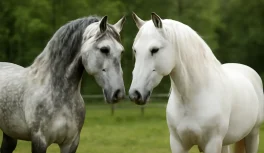
Say “Lusitano horse” to anyone familiar with the breed and the mental image almost inevitably conjures a gray horse — white, dappled, flea-bitten. The association runs so deep that many people believe all Lusitanos are gray. They aren’t. But the prevalence of gray in the breed is not accidental — it is the result of centuries of selection that prioritized this coat color for reasons that blend aesthetics, function, and history.
The Lusitano horse’s coat colors represent a fascinating chapter in equine genetics and breed tradition. Understanding which colors are accepted, why gray dominates, and what the diversity of coats says about the modern Lusitano is more than curiosity — it is part of what defines the studbook standards and market values of the breed.
Why Does Gray Dominate the Lusitano?
Equine gray is not a color in itself — it is a genetic modifier. Horses that appear gray are actually horses of another base color (bay, chestnut, roan) carrying the G (Gray) gene. This gene progressively depigments the coat over the years, transforming the horse from its birth color to an increasingly lighter gray, eventually reaching pure white at maturity.
The G gene is highly frequent in the Lusitano due to historical selection rooted in cultural tradition. The great classical equitation schools — the Portuguese School of Equestrian Art and the Spanish Riding School of Vienna — preferred gray and white horses for visual reasons: they are more visible in evening performances or dramatic lighting, and they create stronger contrast with the riders’ dark uniforms.
For centuries, farms supplying horses to these schools actively selected for gray — and the gene proliferated throughout the population. Today, more than 50% of registered Lusitanos carry some form of gray coloring.
What Coat Colors Are Accepted by the Lusitano Studbook?
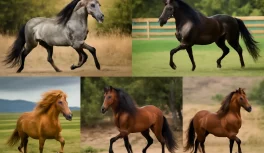
The APSL studbook accepts all solid coat colors. The main ones are:
Gray (dapple gray / flea-bitten / white): Born at another color that progressively lightens over years. Variations include:
- Dapple gray: classic gray with darker circular patterns visible on the coat
- Flea-bitten gray: gray base with small darker specks (“fleas”) distributed across the body
- White: the final result of complete depigmentation in older horses
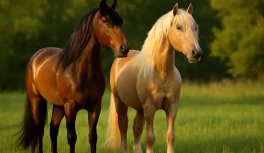
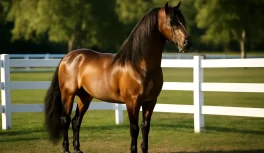
Bay: Golden-yellow body with black mane, tail, and lower legs. One of the most aesthetically valued coat colors in the contemporary market, especially in rich golden-toned combinations.
Brown/Chestnut (dark bay): Brown body with black mane and tail. Typical (with black lower legs) or atypical (mane and tail matching body color) variations are both accepted.
Chestnut (sorrel): Body and mane in the same copper or orange tone. Less common in the Lusitano than in some other breeds but fully accepted by the studbook.
Roan: A mixture of white hairs and colored hairs creating a “granite” visual effect — bay roan, chestnut roan, brown roan. Each combination produces a distinct appearance that particularly attracts breeders seeking visual diversity in their herd.
Dilute colors: Resulting from the interaction of the Cr (Cream) gene with base coat colors. Palomino (chestnut + one Cream gene), cremello, perlino. Accepted by the studbook but rare in Lusitanos.
Not accepted: The studbook does not register Lusitanos with extensive pinto markings (tobiano, overo), appaloosa, or other extensive spotted patterns. The Lusitano is, by definition, a solid-color horse. Small white markings on legs and face (star, stripe, socks) are accepted and common.
The Genetics of Gray: What Every Breeder Should Know
The G (Gray) gene is dominant. A horse carrying even one copy of the gene (heterozygous Gg) will be gray, regardless of any other coat color. A horse carrying two copies (homozygous GG) will also be gray — and will produce 100% gray foals when bred to any partner.
This has practical implications for breeders:
- Two heterozygous gray parents have a 75% chance of producing a gray foal
- To consistently produce non-gray foals, at least one parent must be negative for the G gene
- Controlling coat color in predominantly gray herds is difficult without genetic testing
The Gray gene is also associated with melanoma in older horses. Gray horses over 15 years old frequently develop melanoma — typically benign skin tumors that form around the perineal region, under the tail, and at the salivary glands. Most are benign and slow-growing, but some can become problematic depending on location and size. Regular veterinary monitoring is recommended for mature gray Lusitanos over age 10.
Which Coat Colors Are Rare and Valued in the Lusitano Market?
Some coat colors are particularly rare in the Lusitano and consequently attract special attention from collectors and breeders seeking distinction.
Rich golden bay with silky mane: A bay with exceptionally intense gold tones, dark skin, and lustrous black mane and tail is considered one of the most beautiful combinations in the Iberian market. Exceptionally photogenic, this coat type commands consistent demand.
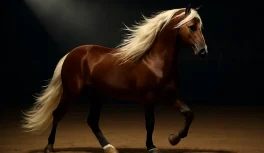
Palomino: Produced by the Cream gene acting on a chestnut base, creating a gold body with nearly white mane and tail. Extremely rare in the Lusitano and valued especially in the North American and Australian markets, where golden coats carry strong cultural appeal.
Cremello/Perlino: Two Cream genes on a base color produce a cream or ivory-colored horse with blue or greenish eyes. Exceptionally rare, rarely seen in Lusitano breeding, and immediately recognizable.
Dark roan: Roans with chestnut or dark brown base have an almost metallic appearance that captivates especially in photographs and outdoor presentations. The interaction between colored and white hairs creates a visual effect that changes with the light.
Does Coat Color Affect Performance?
The direct answer: no. There is no scientific evidence that coat color influences temperament, athletic ability, intelligence, or general health in the Lusitano — or in any horse breed.
The popular belief that “chestnut horses are more difficult” or “gray horses are calmer” has circulated in the equestrian world for centuries without ever being confirmed in controlled studies. The Lusitano’s temperament is determined by behavioral genetics, bloodline, training history, and management — not by coat color.
What coat color communicates to the market is information about bloodline and breeding decisions. A herd with coat diversity signals breeders who made deliberate choices regarding the G gene. A uniformly gray herd signals breeders who prioritized that presentation across generations. Both choices are legitimate — and both reflect distinct visions of what the Lusitano should look like.