The miniature horse has a characteristic that surprises most people discovering the breed: proportionally to its size, it demands virtually the same care as a full-sized horse. Veterinary visits, farrier work, equine dentistry, vaccinations, deworming, balanced nutrition — all of this is part of the routine for anyone keeping a healthy mini horse. The difference lies in the doses, the dimensions, and in certain cases, the specific health predispositions that reduced size brings. Understanding these details is what separates doing it well from doing it poorly.
Physiology That Changes Everything
Understanding the physiological particularities of the miniature horse helps explain why certain care requirements differ — and why some health problems are more common than in larger breeds.
Efficient metabolism: the miniature horse has an intensely “thrifty” metabolism — developed over centuries of adaptation to limited feed resources. This means its body converts food to fat far more efficiently than a Thoroughbred or Warmblood. A diet that is only slightly above maintenance needs leads to obesity within weeks, not months.
Tooth-to-mouth ratio: a miniature horse’s teeth are not proportionally smaller than the rest of the body. This creates a relatively crowded mouth with a greater tendency toward retained caps, hooks, enamel points, and irregular alignment. Dental problems are one of the most common causes of weight loss in miniatures.
Foal-to-birth-canal ratio: in Falabella mares and in some American Miniature Horse bloodlines, the foal can be disproportionately large relative to the mare’s birth canal. Dystocia — difficult delivery — is a veterinary emergency that occurs more frequently in miniatures than in larger breeds and requires specialized attention.
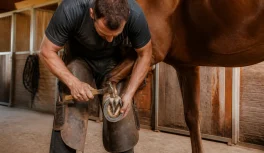
Access to care in the field: small hooves require farriers with experience in miniature horses; standard equipment designed for large horses may not work adequately for very small hooves.
Feeding: Where Most Mistakes Are Made
A miniature horse’s diet is where most owners go wrong — almost always through overfeeding, not underfeeding.
The Foundation: Quality Hay
Hay should make up 80 to 90% of the diet of a miniature horse in maintenance (no work, no pregnancy, no active growth). The minimum recommended is 1.5% of body weight in dry matter per day. For a 220-lb (100 kg) miniature, that equals about 3.3 lbs (1.5 kg) of dry matter — or roughly 3.5 to 4 lbs (1.6–1.8 kg) of hay at normal moisture levels.
Recommended hay types: Timothy, Bermuda, Orchardgrass, Teff, and similar grass hays with moderate fiber content and low water-soluble carbohydrates. Alfalfa should be used with caution — it’s calorie-dense and high in protein, appropriate for growing foals or lactating mares but easily excessive for adults in maintenance.
Controlled vs. free-choice feeding: for most healthy adult miniatures, controlled feeding (two or three portions daily) is safer than free-choice, especially in animals already prone to weight gain. If the animal maintains an ideal BCS (Body Condition Score of 4 to 5 on the Henneke 1–9 scale), free-choice low-energy hay is generally manageable.
Concentrate Feed: Only When Needed
Most miniature horses in maintenance need no concentrate feed. A miniature with adequate pasture or quality hay who receives grain without a specific reason will almost certainly gain excess weight.
Situations that justify supplemental concentrate:
- Growing foals (extra protein and minerals)
- Mares in late pregnancy or lactation (energy and calcium)
- Animals struggling to maintain weight due to dental problems or metabolic conditions
- Athletes or animals in regular driving work
In these situations, use miniature-formulated feed or low-starch concentrate (less than 10% starch and sugars in dry matter) in reduced quantities.
What to Never Feed
- Sugar, molasses, cookies, bread, pasta
- Lush spring grass without managed access
- Excess fruit (an occasional piece is fine, but regular amounts represent an unnecessary sugar load)
- Supplements without a diagnosis — excess iron, selenium, and vitamin D can be toxic
Water and Salt
Fresh clean water available at all times. An adult miniature consumes between 2 and 5 gallons (10–20 liters) per day depending on climate, diet, and activity level. A loose or block mineral salt (NaCl + trace minerals) must be available at all times.
Space and Facilities: The Ideal Environment
Minimum Area
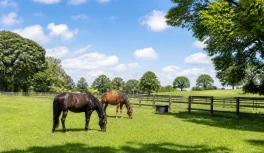
As noted in the companion article on miniature horses as pets, the minimum recommended is roughly 5,400 square feet per animal, with 65 to 97 square feet of covered shelter. For two animals, the ideal is 8,600 to 10,800 square feet.
The space should be divided between:
- Main paddock: area for movement and socialization
- Shelter: covered structure with solid roof for protection from rain, wind, and direct sun. Ground of packed dirt or equine rubber mat — never hard surfaces like concrete.
- Feeding area: hay should be offered at a slightly elevated height (hay net or raised feeder) to prevent ingestion of parasites from the ground and to maintain a healthy cervical posture.
Appropriate Fencing
Fencing must be designed to contain small animals without creating entrapment risks. Horizontal wood board fencing is ideal. Galvanized wire mesh with tight openings (similar to large-gauge woven wire) works, but the opening must be small enough that the animal cannot put its head through. Barbed wire is unsuitable for any equine, including miniatures.
Footing and Drainage
The paddock must have good drainage. Accumulated mud is a breeding ground for bacteria and fungi that attack hooves (white line disease, thrush). Adding a layer of pea gravel or fine crushed stone to high-traffic areas significantly improves conditions.
Hoof Care: The Most Critical Routine
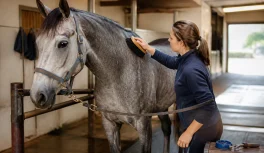
A miniature horse’s hooves grow exactly the same way as full-sized horses’ hooves and require regular trimming. The standard interval is every six to eight weeks. For young growing animals or animals with a history of conformation issues, the interval may be shorter.
Neglecting hoof care is one of the most common causes of laminitis and chronic conformation problems in domestic miniatures. Overgrown hooves alter the biomechanics of the entire limb, creating stress on joints, tendons, and bones.
Miniature-experienced farrier: not every farrier who works with large horses has the tools and technique adapted for very small hooves. Seek out professionals with specific experience in small equines.
Dental Care: Frequently Neglected
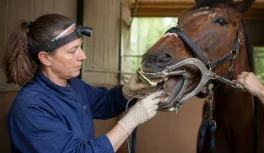
Dental evaluation should be performed by a veterinarian every six to twelve months depending on age and history:
- Young horses (up to age 5): every six months — the most intensive period of tooth eruption and change
- Adults (5–15 years): annually, if no identified problems
- Seniors (over 15 years): every six months — irregular wear accelerates with age
Signs of dental problems: unexplained weight loss, feed dropping from the mouth while chewing (quidding), sensitivity to touch near the jaw, bad breath, food packing between cheek and teeth.
Vaccination and Deworming: The Basic Schedule
Vaccination: the protocol varies by region, but generally includes:
- Equine influenza: annually (or twice yearly for show animals)
- Tetanus: annually
- Rabies: annually (required in many regions)
- Other vaccines (EEE, WEE, herpesvirus, etc.) per regional veterinary recommendations
Deworming: every three to six months, rotating active compounds (ivermectin, moxidectin, fenbendazole, oxibendazole). Parasite resistance to treatment is a growing concern — veterinarians increasingly recommend basing deworming on fecal egg counts (FEC) rather than fixed calendars.
Monitoring Health Day to Day
Beyond scheduled veterinary visits, an attentive owner observes daily:
Body Condition Score (BCS): evaluate monthly. A healthy miniature scores between 4 and 5. A score above 7 indicates obesity; below 3, undernutrition.
Water and hay intake: any sudden reduction in consumption can signal pain, dental problems, or illness.
Manure production: a horse that hasn’t defecated normally for more than 12 hours, or whose manure appears very dry, may have an impaction colic — a veterinary emergency.
Rectal temperature: normal between 99.5 and 101.5°F (37.5–38.5°C). Above 102.2°F (39°C), contact your veterinarian.