The Criollo horses of South America form one of the most remarkable equine families in the world. Descendants of Iberian horses brought to the continent in the 16th century, these breeds endured centuries of brutal natural selection — extreme altitudes, desert heat, flooded plains, bitter cold — and came out the other side stronger, more efficient, and more durable than virtually any refined European breed that followed. Understanding the Criollo family means understanding how a continent shaped a horse over generations.
How Did the Criollo Family Develop?
When European colonizers arrived in South America, they brought horses of Iberian origin — animals with Arabic, Berber, and Andalusian bloodlines, already sturdy by European standards but entirely unadapted to the New World. What happened over the following decades was one of the most remarkable periods of natural selection in equine history.
Horses escaped, were released, or wandered into vast unfarmed territories — the Argentine Pampas, the Bolivian Chaco, the Brazilian cerrado, the Chilean Andes. The animals that survived were not the finest-looking or the tallest: they were the most efficient, the toughest, the ones that could live on poor grass and little water. That pressure built the Criollo foundation.
Afterward, geographic isolation did the rest. Different populations spent centuries separated by mountains, rivers, and distance. Each country developed its own variation — with its own breeding rules, selection tests, and physical standards.
The Main South American Criollo Breeds
Chilean Criollo
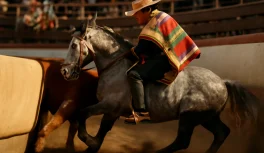
One of the oldest and best-organized Criollo breeds on the continent. Formally standardized since 1844 by the Federación del Rodeo Chileno, the Chilean Criollo is the only member of the family whose standard was built around a specific performance test — the Chilean rodeo. It is compact, powerfully hindquartered, agile, and brave, standing between 13.2 and 14.3 hands.
Brazilian Crioulo
Developed primarily on the gaucho pampas of Rio Grande do Sul, the Brazilian Crioulo was shaped for endurance and long-distance ranch work. The breed’s signature event is the Freio de Ouro, a multi-day endurance competition covering over 750 km. Slightly larger and longer-bodied than the Chilean, the Brazilian Crioulo excels in aerobic output and sustained movement.
Argentine Criollo
The Argentine Criollo carries the heaviest influence from the feral horses of the Pampas — the bagualos that spent centuries adapting without human intervention. Hardy, long-lasting, and deeply tied to gaucho identity, the breed is tested in long-distance marches and working cattle events. The Argentine Criollo’s most famous moment came when two of them, Mancha and Gato, carried their rider from Buenos Aires to New York — roughly 21,500 km — in 1925 to 1928.
Peruvian Paso
The most elegant and distinctive member of the Criollo family. Developed in Peru with stronger influence from Spanish gaited horses, the Peruvian Paso is famous for its natural lateral ambling gait — the paso llano — which is extraordinarily smooth to ride and distinctive in rhythm. It stands between 14 and 15 hands and carries a notably gentle temperament.
Other Regional Criollos
The Criollo family also includes lesser-known but equally important regional variations:
- Colombian Paso — specialized in ambling gaits and mountain terrain
- Bolivian Paso — closely related to the Peruvian, with similar gait characteristics
- Mustang — descendants of Criollo horses that reached North America through Mexico, now the symbol of wild American freedom
All share the same colonial Iberian root and were shaped by the same core demand: survive and work under extreme conditions.
What Unites All Criollo Horses?
Despite their differences, all South American Criollo breeds share qualities that make them stand apart:
- Exceptional endurance — ability to perform in harsh conditions with less support than imported breeds
- Metabolic efficiency — ability to thrive on minimal supplementation and simple pasture
- Longevity — Criollo horses working productively at 20, 22, or even 25 years are common
- Balanced temperament — calm, trainable, and manageable despite their working background
- Adaptability — functioning at altitude, in extreme heat, on rocky ground, or in flooded terrain
These qualities make Criollo horses not merely culturally prized, but practically superior in real working conditions.
Which Criollo Is Best Suited to Which Environment?
Each Criollo excels in the context that shaped it. The Chilean Criollo in the rodeo. The Brazilian Crioulo in endurance. The Argentine Criollo across the open Pampas. The Peruvian Paso on trails where comfort of ride matters above all.
But any well-bred, healthy Criollo brought into a working farm environment will bring centuries of refinement with it — a horse that needs less intervention, costs less to maintain, and lasts longer than most modern competition breeds. That’s the Criollo promise, and four hundred years of history back it up.