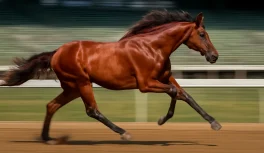
Behind the cameras, the sold-out stadiums, and the red carpets, there’s a version of some of the world’s most famous people that rarely makes headlines: the version standing quietly in a barn at six in the morning, brushing a horse before the rest of the world wakes up.
Celebrities who love horses come from every corner of the spotlight — athletes, musicians, actors, royalty, fashion icons, and billionaires. What they share isn’t a sport or a hobby. It’s a relationship with an animal that has no interest in how many records they’ve broken.
Why Do Horses Appeal to the Most Famous People on Earth?
The most honest answer is also the simplest: horses don’t know who you are.
For someone whose daily life involves handlers, agents, publicists, and constant public scrutiny, an interaction with a 1,200-pound animal that responds only to your posture, your breathing, and the steadiness of your hands is — paradoxically — a relief. The horse didn’t see the performance. It doesn’t have an opinion about the album. It can’t be impressed by your box office.
What the horse responds to is presence. For people conditioned to manage their image every waking hour, that demand for pure authenticity is both disorienting and deeply appealing.
There’s also a physical and psychological layer that’s well documented in sports science. Riding requires sustained focus, full-body coordination, and a quality of listening that very few activities can replicate. The rhythmic contact with a moving horse activates the parasympathetic nervous system — the same mechanism behind meditation and breathwork. For people who live inside relentless noise, the horse is one of the most reliable ways back to stillness.
Athletes: When Champions Find a Second Calling
The equestrian world has its own heroes — riders who’ve spent decades earning medals at the highest levels. But the more interesting cases are the athletes who arrived from other sports and never really left.
Belarusian tennis player Victoria Azarenka, a two-time Australian Open champion, rides regularly and describes the work with horses as something her sport — with all its intensity — can’t fully provide. Many elite athletes recognize the pattern quickly: riding develops anticipatory focus rather than reactive focus. It slows you down without making you passive.
Jennifer Gates, daughter of Bill Gates, didn’t inherit an interest in tech. She built a serious career in show jumping, competing at advanced international levels and making equestrian sport a genuine identity rather than a pastime. Her father, for his part, became one of the sport’s most committed supporters — following the circuit with the engagement of someone who has learned to understand what he’s watching.
Princess Anne of the United Kingdom went further than any of them. The first member of the British royal family to compete in the Olympics, she represented Great Britain in three-day eventing at Montreal in 1976. That is not a ceremonial appearance. Three-day eventing combines dressage, cross-country, and show jumping over three consecutive days. Titles and resources don’t help.
Musicians and the Language of Horses
The connection between music and horses has structural logic beneath the surface.
Music, at its core, is nonverbal communication — it conveys states and emotions that words can’t reach. The interaction between rider and horse is also fundamentally nonverbal: it runs on posture, rhythm, breath, and intention. Musicians who work in improvisation describe riding with the same vocabulary they use for jazz: you propose, the horse responds, the dialogue develops in real time.
Lady Gaga maintains horses as a central part of her private life — a remarkable contrast to the theatrical scale of her performances. For an artist who constructs one of the most elaborately crafted public personas in contemporary music, the barn seems to serve the opposite function: it’s where the persona comes off. The horse has no idea who Lady Gaga is, and that, in all likelihood, is exactly the point.
Lenny Kravitz took the connection further in the most literal way possible. He owns a property in Bahia, Brazil, where horses are woven into the daily rhythm of a life he has deliberately built as far as possible from Los Angeles and New York. He has spoken about Brazil as a space of reconnection — and horses appear in that context not as wealthy accessories but as part of a philosophy he actually lives.
Willie Nelson, the patriarch of American country music, is legendary not just for his music but for the life he built around it: a Texas ranch, horses, and a daily routine that has refused the glamour of Nashville for decades. Shania Twain grew up with horses in rural Canada and never moved away from them. Bruce Springsteen keeps horses on his New Jersey farm — well outside the stadium circuit.
Hollywood and the Horses That Stayed
Viggo Mortensen is the most-cited case when actors and horses come up — and for good reason. During the filming of The Lord of the Rings, he grew so attached to his horse that he bought the animal when production wrapped. He did the same with two others from the same set, rescuing them from uncertain futures.
For Mortensen, horses aren’t production props. They’re relationships. He has described the process of earning a horse’s trust as something that changes the actor before it changes the character — it demands a quality of presence that film sets, for all their intensity, rarely require.
William Shatner, best known as Captain Kirk in Star Trek, built one of the most respected quarter horse breeding operations in the United States. He hosts an annual charity event at his farm that brings together breeders from around the world. The passion that began as a young man in Montreal became, over decades, one of the defining pillars of who he is outside of acting.
Fashion, Royalty, and Horses as Cultural Code
The British royal family didn’t choose an equestrian identity — they inherited one centuries deep. Queen Elizabeth II attended horse racing events until the final years of her life with an unwavering devotion. King Charles III played polo for decades. Princess Haya bint Al Hussein, daughter of King Hussein of Jordan, served as president of the International Equestrian Federation and competed in the Olympics. Very few members of any royal house have gone that far inside the sport itself.
In fashion, the connection is structural. Hermès began as a maker of saddlery and harnesses in Paris in 1837. The Kelly bag was originally a saddlebag. The brand’s logo remains a carriage and horse. Ralph Lauren built an empire using polo and equestrian life as its central visual language — and rides himself. Gisele Bündchen rides regularly, connecting the practice directly to her well-being rather than to any image she’s managing.
In soccer, Thomas Müller — eight-time German league champion with Bayern Munich, 2014 World Cup winner — is well known in equestrian circles for keeping horses at his Bavarian property. His wife, Lisa Müller, is a professional dressage rider who competes at high levels. The image of the striker opponents fear most feeding horses in a Bavarian field before training is one of the more eloquent contrasts modern sport can offer.
What Horses Offer That Fame Doesn’t
Fame creates an environment where almost everything can be delegated, managed, or outsourced. The horse cannot be delegated. It responds to whoever is in front of it — not their representative, not their brand, not the persona they’ve built for public consumption.
The demand for direct authenticity — you can’t charm your way through a spook, you can’t negotiate with a horse that doesn’t yet trust you — is, for people who live inside constant image management, exactly what they’re looking for.
There’s also the question of time. In a world of immediate feedback and near-instant results, horses operate on a completely different schedule. Building trust with a horse takes months. Learning to communicate with real precision takes years. For celebrities accustomed to rapid outcomes, that forced patience functions as something they rarely find elsewhere: a practice that doesn’t respond to their usual levers.
What connects Lady Gaga, Viggo Mortensen, Thomas Müller, and Queen Elizabeth II — people from worlds that couldn’t be more different — isn’t the horse itself. It’s what the horse represents: a space where fame doesn’t reach, where what you are matters more than what you appear to be.