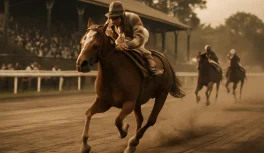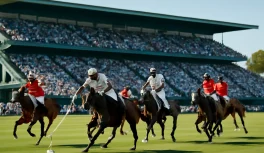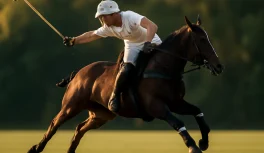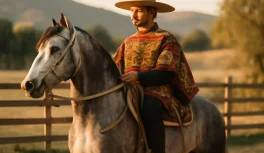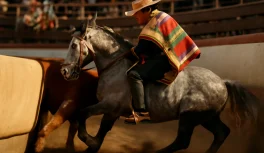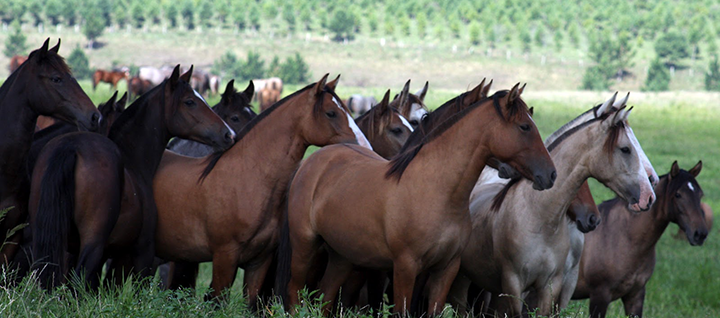
Of all the animals domesticated by man, the horse is without a doubt the most important.
Exclusive Content
Being a herbivore, the horse does not ensure its survival by hunting other living beings. Free in nature, they graze for up to 16 hours a day, due to the low caloric content of their natural diet. They need to store energy to use it when necessary. Herd horses usually graze within about 8 km from the point where they drink water.
Their habits do not qualify them for attack; on the contrary, they are classified as prey animals. Their defense weapons are few.
a) Bite – When biting (generally stallions), the horse’s jaw produces a deep groove. As this leads to uncertain close combat, horses usually employ this method among themselves, rarely using it to attack humans.
b) Kicks – Due to their lateral field of vision, which provides nearly 350 degrees of sight, horses can deliver an accurate kick. To repeat the movement, however, they must support themselves on the forelegs. If the target moves, the horse seeks a new position, allowing the victim time to defend itself.
c) Flight – This is truly their main defense. Their legs are built for speed, and they can reach up to 60 km/h in just a few seconds.
The personality of a horse results from heredity, age, handling, climate, and its genital and endocrine systems.
The herd is a large family in which some animals establish dominance over others. Younger horses join groups of older ones and are dominated by them. Within the group, affinity relationships are formed (“madrinhar”). If one of them dies or is taken to another place, the others may show signs of distress. A horse can even obey orders from children, because it accepts being dominated by a human just as it would by another member of the herd. They need leadership.
When greeting an unfamiliar horse, they do so face to face. Both want to see each other clearly and be sure they cannot be kicked unexpectedly.
The horse is a socially collective animal. It needs companionship and to communicate with other members of the group. They only need to convey basic emotions and establish a hierarchy of dominance.
When a horse bites another, it may simply mean the imposition of hierarchy.
It is showing that it is the one in charge.
If it attempts to bite the rider, do not allow it. Correct the horse immediately—this can be with a shout or a show of force.
Article written by Deolir Dall’Onder for Revista Acontece Sul, Year XII, Issue 127.