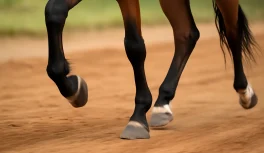
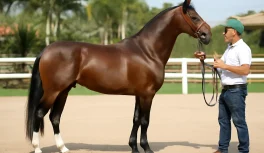
When someone discovers the Paso Fino and decides they want one, the first question after the “wow” moment is usually: “how much does it cost?” And the second, immediately after: “where do I find one?” The Paso Fino horse price is one of the least documented questions in the Brazilian equestrian market — because the breed, unlike the Mangalarga Marchador with over 600,000 registered animals, has a comparatively smaller presence in the country.
But the market exists, is growing, and has its own dynamics. Understanding the factors that define the price of a Paso Fino — whether in Brazil, the United States, or Puerto Rico — is the first step toward a smart purchase.
How Much Does a Paso Fino Cost in Brazil?
The Brazilian Paso Fino market is concentrated in the South (Rio Grande do Sul, Santa Catarina) and Southeast (São Paulo, Minas Gerais), with some breeders in the Center-West. Prices reflect the breed’s relative scarcity in the country — and the quality of available animals, which tend to be from selected bloodlines precisely because Paso Fino breeders in Brazil are fewer in number and generally more committed to excellence.
Weanling foals (0–6 months): Between R$5,000 and R$20,000, depending on bloodline and parents. Foals from imported Puerto Rican or Colombian stallions with show records start above R$15,000.
Young horses (3–4 years), without advanced training: Between R$12,000 and R$40,000. Variation depends on the gait quality already demonstrated, conformation, and pedigree.
Adult horses in work (5–10 years), trained: Between R$25,000 and R$100,000. Animals with solid gait and proven docility, especially for trail and recreational use, run R$30,000–60,000. Show horses with titles can exceed R$100,000.
Elite stallions: Imported stallions with international titles and proven offspring can reach R$200,000 or more.
How Much Does a Paso Fino Cost in the United States?
The American market is the largest and most organized in the world for the breed. Supply is broad — from entry-level trail horses to national champions — and prices reflect that range.
Leisure horses (trail horses): Between USD 3,000 and USD 12,000. Horses with good gait and docile temperament, without competition records. Excellent for trail riding and recreational equitation.
Intermediate competition horses: Between USD 10,000 and USD 35,000. Animals with show training, some competitive history, consistent gait in paso fino and paso corto.
Advanced competition / national champions: Between USD 40,000 and USD 150,000+. Horses with multiple titles at USPFHA-recognized shows, documented champion bloodlines, show conformation.
Elite stallions: The top of the American Paso Fino market has no fixed ceiling. Stallions with champion offspring records and multiple titles can reach USD 300,000 or more.
What Defines the Price of a Specific Paso Fino?
1. Gait quality and consistency
This is the most important factor for the buyer who wants to ride — not just breed. A Paso Fino with natural, regular, smooth gait across all three paces (fino, corto, largo) is worth significantly more than one with irregular or “marred” gait.
Smart buyers mount the horse in multiple situations before closing a deal: in an arena, on a short trail, on slightly irregular terrain. A gait that “only works in training” is a red flag.
2. Documented pedigree
Registration in the recognized organization of the country of origin — USPFHA (USA), PFHACOL (Colombia), ABCPF (Brazil) — is the minimum. But within the registry, bloodline matters.
Animals descended from champion stallions — with names recognized on the show circuit — carry pedigree value reflected in the price.
3. Competition history and titles
Titles at recognized shows are public proof of gait quality, evaluated by independent judges. A horse with three national show titles doesn’t need just the seller’s word to prove quality.
4. Age and training
The market “peak” for use horses is between 5 and 12 years — sufficiently trained for immediate use, with many productive years ahead. Very young (3–4 years) or older horses (15+) tend to cost less, though both young and experienced veterans have their own specific markets.
5. Health and physical soundness
A complete pre-purchase exam (limb radiographs, tendon ultrasound, full clinical exam) is a mandatory investment before any purchase above R$15,000. Horses with a history of laminitis, chronic joint problems, or navicular are risks that no low price compensates.
6. Coat color
Some coat colors are more valued in the Paso Fino market — particularly rich golden bay with lustrous mane, pronounced dapple gray, and jet black. Paints are rare and valued by collectors. These market preferences can add 10–20% to the price of otherwise equivalent animals.
Is It Worth Importing a Paso Fino from Puerto Rico or Colombia?
For breeders who want to build a serious program in Brazil, importation can make sense — but needs careful planning.
The cost of air transport of an adult horse from Puerto Rico to Brazil ranges from USD 4,000 to USD 8,000 depending on route and carrier. Adding health paperwork, quarantine, and certifications, total import costs can reach USD 10,000–15,000.
This cost makes sense when the imported animal has pedigree or quality that justifies the investment — especially for a stallion that will produce offspring in Brazil. For a leisure or personal use horse, importation is rarely more economical than finding a quality domestic breeder.