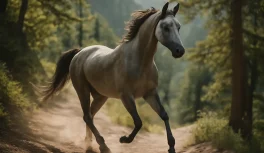
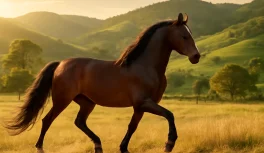
Some breeds exist to work. Some breeds exist to run. And some breeds seem to have been created for one singular purpose: to make the rider forget they’re moving at all. The Paso Fino horse breed belongs to that third category — and it delivers that experience with a precision no other equine breed can match. The name says everything: paso fino means “fine step” in Spanish. And that’s exactly what the breed delivers — a four-beat gait so delicate, so regular, and so smooth that riders describe the experience as floating.
Developed in colonial America from Iberian blood refined over centuries, the Paso Fino survived the decline of the colonial era, partial obscurity through the twentieth century, and re-emerged with growing force in equestrian markets across Latin America, the United States, and Europe. Understanding this breed means understanding why riders who mount a good Paso Fino rarely go back to anything else.
Where Does the Paso Fino Come From?
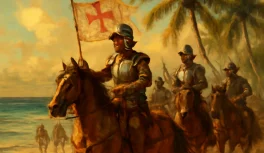
The history of the Paso Fino begins with Christopher Columbus — or more precisely, with the horses he brought on his voyages to the New World. From 1493 onward, Spanish horses began arriving in the Caribbean: Andalusians, Barbs, and the now-extinct Spanish Jennet — naturally gaited animals of exceptional refinement.
On the Caribbean islands and South American colonies, these horses reproduced and adapted to the tropical climate. Spanish colonizers selectively bred, over generations, the animals with the smoothest gait — because colonial administrators and landowners needed to ride for hours without the physical toll of the trot. This selection process lasted centuries, and the modern Paso Fino is the result.
The principal centers of breed development were Puerto Rico, Colombia, and the Dominican Republic. Each region produced a distinct bloodline:
Puerto Rico: Smaller, more refined horses with extremely delicate show-quality paso fino gait.
Colombia: Slightly larger, more temperamental horses with greater stride extension — valued for fieldwork and trail riding.
Dominican Republic: An intermediate line combining docility with versatile gait.
In the 1960s and 1970s, the Paso Fino arrived in force in the United States, where enthusiasts built one of the most structured show circuits in the gaited horse world. Today the breed has a presence in over 50 countries.
What Is the Paso Fino Gait?
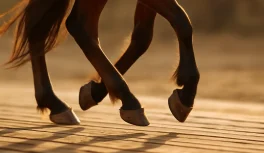
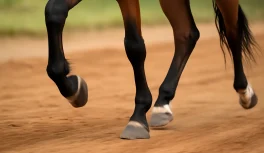
The breed’s defining gait — mandatory for registration and competition — is the lateral four-beat march. Unlike the two-beat diagonal trot, the paso fino has four independent beats, with the horse supporting weight in sequential triple-support phases. The result is the near-total absence of vertical movement for the rider.
The paso fino has three recognized variations:
Paso fino (show gait): The most collected and precise gait. Steps are short, rapid, and remarkably regular — like a living metronome. Evaluated at shows on a wooden platform (the tablero) that amplifies hoof sounds: the judge hears perfection before seeing it. The rider experiences delicate vibration — “sitting in a gently massaging armchair.”
Paso corto (working gait): Greater stride reach, maintaining smoothness. The trail paso fino — covering 10–20 km/h efficiently over hours. A well-conditioned horse in paso corto can cover 30–50 km daily on trail.
Paso largo (fast gait): The breed’s speed gait — full extension, speeds reaching 30–40 km/h, lateral smoothness maintained. Few horses execute a truly correct paso largo; it’s the most demanding variation to sustain without breaking to trot or canter.
What Does a Paso Fino Look Like?
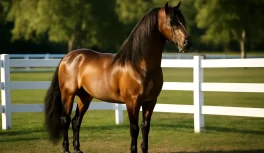
The Paso Fino is a small to medium-sized horse — something that surprises first-time observers. Stallions typically stand 14–15.2 hands, with most show animals in the 14.2–15 hand range.
Head: Refined, expressive, with large bright eyes. Straight or slightly convex profile — clear Iberian heritage.
Neck: Long, arched, well-set. In show horses, neck carriage is developed to maximize the visual impact of the gait.
Body: Compact, short strong topline, well-sprung ribs, well-developed hindquarters.
Limbs: Fine but with good bone quality, compact hooves. The fineness of the limbs contributes to the delicacy of the gait.
Mane and tail: Abundant, silky — a hallmark maintained especially in show horses.
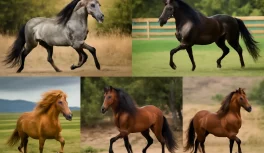
Coat colors: All solid colors accepted. Bay, chestnut, black, gray, and their variations are common. Paints appear, especially in Puerto Rican lines.
How Is the Paso Fino Used Today?
Shows and formal competition: The US Paso Fino show circuit, regulated by the USPFHA, is highly organized with classes for all ages and skill levels. Categories evaluate gait, conformation, presentation, and performance.
Trail riding: The paso corto is one of the most efficient gaits for long-distance trail riding. Paso Fino horses regularly complete multi-day rides of hundreds of kilometers, with riders reporting exceptional comfort after eight-hour days.
Recreational riding: The Paso Fino’s docility and comfort make it ideal for mature riders, people with back or hip limitations, and beginners who need safety and comfort simultaneously.
Working equitation and dressage: Paso Fino horses of privileged conformation show natural aptitude for collection movements — the lateral gait already requires posterior engagement, facilitating the transition to classical disciplines.
Is the Paso Fino Easy to Maintain?
As a breed naturally adapted to the tropical Caribbean climate, the Paso Fino is surprisingly economical to maintain.
Feeding: An efficient-metabolism horse that maintains good body condition on quality forage with mineral supplementation. In colder climates, concentrate requirements increase.
Hooves: Naturally good-quality hooves. Many horses work barefoot with excellent results. Conventional shoeing for hard or high-demand surfaces.
Health: No particularly problematic genetic predispositions. Standard equine management for colic and laminitis prevention applies.
Space: The smaller size requires less physical space and generates lower per-head costs than larger breeds — a relevant factor for breeders in urban or semi-urban areas.