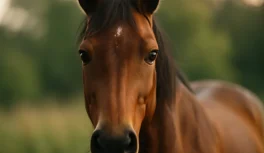
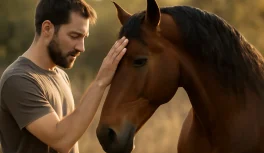
Equine-assisted therapy has been around since the 1960s, and its clinical results are documented across a wide range of conditions: anxiety disorders, PTSD, depression, autism spectrum disorder, and trauma recovery. The challenge, for much of that history, was explaining why it worked. Practitioners could describe outcomes. Researchers could measure them. But the mechanism — what specifically happened in the nervous system when a person spent structured time with a horse — remained poorly understood.
The discovery of the horse’s electromagnetic field and its effects on human heart rate variability provides a piece of that explanation. Equine therapy and the electromagnetic field are connected at a level that’s biological, measurable, and independent of belief.
What happens physiologically during equine therapy?
The most commonly measured markers in equine therapy research are cortisol (the primary stress hormone, measurable in saliva) and heart rate variability (HRV), the measure of autonomic nervous system balance and adaptability.
Across multiple independent studies, the results converge: participants with elevated anxiety and low baseline HRV show measurable reductions in salivary cortisol and improvements in HRV coherence after 15 to 30 minutes of interaction with horses in calm, controlled environments. These effects occur:
- During mounted sessions (riding with an instructor)
- During ground-based sessions (grooming, leading, simply being near the horse)
- In children and adults
- Regardless of prior experience with horses
- Independently of the person’s stated beliefs about horses or their therapeutic value
The last point matters. The physiological effect is not simply a positive expectation effect (placebo). People who arrive skeptical show similar HRV shifts as those who arrive enthusiastic, provided the interaction is low-stress and the horse is calm.
What role does the electromagnetic field play specifically?
The HeartMath Institute’s research on cross-species cardiac field interactions provides a framework for understanding the mechanism.
The horse’s heart generates an electromagnetic field approximately five times more intense than the human heart’s, detectable at up to 6 feet from the animal’s body. When a horse is in a state of high cardiac coherence — a calm, secure horse with a regular, organized HRV pattern — its field propagates outward in rhythmic waves.
When a human’s nervous system enters that field’s range, something measurable begins to occur: the human’s own HRV tends to reorganize toward greater coherence. This is called cardiac field entrainment — the human system follows the rhythm of the horse’s field.
In equine therapy contexts, this means that part of what is happening therapeutically is not behavioral or cognitive. It’s electromagnetic. The horse is, in a biophysical sense, inviting the human nervous system to synchronize to a pattern of greater regularity and calm. And the nervous system, when not under extreme activation, tends to accept the invitation.
Is the horse’s emotional state a clinical variable?
This is one of the most practically significant implications of the electromagnetic field research: the horse’s internal state is not background — it’s treatment.
A therapy horse that is chronically stressed — due to poor management conditions, social isolation, irregular feeding, harsh handling, or excessive work demands — cannot generate the coherent electromagnetic field that makes the interaction therapeutically potent. A stressed horse generates an incoherent field: irregular, contracted, carrying a “threat signal” that human autonomic nervous systems receive and respond to with activation rather than relaxation.
Equine therapy programs that prioritize horse welfare are not simply being ethical (though they are). They’re preserving the core mechanism of the intervention. The coherence of the therapeutic effect depends directly on the coherence of the horse’s heart.
Does equine therapy work differently than other animal-assisted therapies?
Comparative research between equine-assisted therapy and dog-assisted therapy — the most common alternative — suggests some differences in mechanism and effect, though the field is still developing.
The horse’s cardiac electromagnetic field is significantly larger than a dog’s. A dog’s heart weighs approximately 0.5% of body weight; the scale of the field it generates is proportionally much smaller than a horse’s. The entrainment effect documented in human proximity to horses has not been replicated with the same consistency in proximity to dogs.
Several studies also suggest that the size and potential power differential of the horse creates a specific nervous system experience that has no close analogue in other animal therapy formats. Being calm and safe beside an animal that weighs over 1,000 pounds — an animal that could easily injure or kill, and chooses not to — activates a nervous system response related to the experience of genuine safety in a high-stakes environment. This is theorized to be particularly relevant for trauma recovery.
What does ground-based work offer that riding doesn’t?
One consistent finding in equine therapy research is that mounted and unmounted (ground-based) work produce similar therapeutic outcomes for most psychological indications — and unmounted work may be more accessible for severe anxiety.
For someone with significant anxiety or PTSD, introducing riding too early may create additional arousal and hypervigilance, counteracting the field effects and the calming mechanism. Ground-based work — grooming, walking beside the horse, standing quietly — allows the electromagnetic field mechanism to operate without the additional cognitive load of managing the physical task of riding.
Many experienced equine therapists design programs that begin entirely on the ground and introduce riding only after the client has established a calm relationship with the horse in a lower-demand context. This sequencing is consistent with what the research suggests about the mechanism: the field does its work most effectively when the human system is not simultaneously occupied with managing fear or physical challenge.
What makes a therapy horse exceptional?
Based on the available evidence, a therapy horse with high therapeutic value combines:
High baseline HRV coherence: The horse is able to maintain regulated, organized heart rhythm patterns in moderately stimulating environments, not just in complete solitude.
Secure attachment history: The horse was handled with consistency, predictability, and low coercion during its formative years, creating a nervous system that doesn’t chronically over-activate in human presence.
Expressiveness: The horse responds visibly to human emotional states — providing the real-time biofeedback that is one of equine therapy’s unique mechanisms.
Appropriate arousal threshold: The horse doesn’t startle easily in the therapeutic environment but also isn’t over-sedated or emotionally shut down.
Selecting therapy horses based on their behavioral and emotional profile — and maintaining their welfare rigorously — is not just humane practice. It’s clinical protocol.