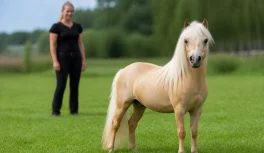
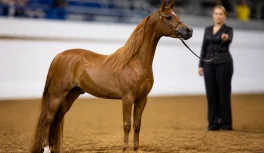
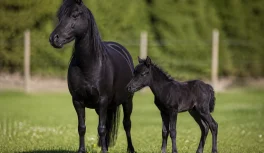
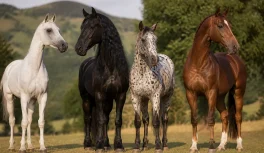
Look at a Missouri Fox Trotter for the first time and the impression is of a balanced horse — not exaggeratedly refined like a pure Arabian, not massive like a draft breed. The conformation communicates function before elegance, though elegance is there for those who know where to look. Every physical characteristic of the Missouri Fox Trotter has a practical explanation rooted in the breed’s purpose: covering difficult terrain, working for hours, and delivering the rider safely and comfortably to the destination.
Understanding the breed’s physical characteristics goes beyond knowing what the Missouri Fox Trotting Horse Breed Association standard says. It means understanding how conformation serves the gait, how structure supports endurance, and how to identify a quality individual within the natural variation that exists in any breed.
Height, Weight, and General Proportions
The Missouri Fox Trotter is a medium-sized horse. Typical adult height ranges from 14.2 to 16 hands (58–64 inches, or roughly 147–163 cm at the withers), with the largest concentration of registered horses falling between 14.3 and 15.2 hands. Animals outside that range exist — both shorter and taller — but are less common.
Typical weight falls between 950 and 1,300 pounds (430–590 kg), with considerable variation depending on bloodlines, feeding, and use. Working horses in active field use tend to be more muscular and dense; animals maintained primarily for show may have more refined body lines.
The general proportions are balanced: body length is slightly greater than height at the withers, contributing to efficient movement. The horse is neither excessively long in the back nor so compact that forward propulsion is compromised. Chest depth is moderate to good, providing adequate respiratory capacity for endurance work.
The Head: Expression and Function
The Missouri Fox Trotter’s head is refined without being delicate. The facial profile is straight or slightly concave — a partial inheritance from the Arabian and Thoroughbred influences in the breed’s foundation. The forehead is broad and flat, with large, expressive eyes well-positioned on the sides of the head, providing the wide field of vision typical of equines.
The ears are medium-sized, alert, and mobile — proportionate to the head, neither excessively short nor long. The nostrils are large and capable of significant dilation, important for respiratory efficiency during prolonged work.
The overall head expression of the Missouri Fox Trotter is what experienced horsemen describe as “intelligent and kind” — bright eyes, alert posture, without the tension or nervousness visible in breeds selected for peak speed performance.
Neck, Withers, and Shoulder
The neck is moderately long to good length, well-arched, and cleanly set into the shoulder. A high, clean neck set matters for the gait: a poorly set neck would compromise the characteristic head nod of the fox trot, which is an integral part of the gait mechanism.
The withers are well-defined and of appropriate height — a low, mutton withers indicates conformational issues that limit front limb freedom of movement. Well-defined withers also help the saddle sit correctly and contribute to shoulder freedom.
The shoulder is oblique and well-angled — a critical factor for smooth gaiting. A straight, upright shoulder restricts front limb extension and produces a shorter, choppier stride. The oblique shoulder of the Missouri Fox Trotter contributes directly to stride length and to the smoothness of the fox trot.
Back, Loin, and Hindquarters
The back is short and strong — a characteristic that endurance work naturally selected for. A short back transmits rear propulsion to forward movement more efficiently, while a long back can result in energy loss and earlier fatigue.
The loin is muscular and well-coupled to the hindquarters. The hindquarters are well-developed, with a moderate slope that provides the driving mechanism for the fox trot. An overly flat (level) croup can compromise rear propulsion; an excessively steep croup can reduce reach. The moderate slope typical of the Missouri Fox Trotter is considered ideal for the gait.
Legs: Where Function Is Most Critical
The Missouri Fox Trotter’s legs are where the Ozark heritage is most evident. The breed has proportionally robust limbs with clean, well-defined joints, moderate cannon bone length, and clearly visible tendons. The bone density is solid without being heavy — what the horse world calls “good bone.”
The hocks are well-angulated and muscular — essential for the driving propulsion of the diagonal gait. A straight hock (sickle or cow hocked) compromises the fox trot mechanics and is considered a conformational fault in the breed.
The hooves deserve specific mention. Missouri Fox Trotter hooves have a reputation for being exceptionally hard and durable — a characteristic so consistent that it’s regularly cited as one of the breed’s practical advantages for owners in regions with rocky or abrasive terrain. This hardness is the direct result of centuries of selection in an environment where fragile hooves didn’t survive the daily work in the Ozarks.
Colors: The Full Spectrum
One of the features that makes the Missouri Fox Trotter visually diverse is the wide variety of coat colors accepted by the MFTHBA. Virtually every equine color is found in the breed, with no color preferences or penalties in association standards — selection was always for gait and conformation, never for coat.
Solid colors: sorrel, chestnut, bay, buckskin, palomino, black, roan (in sorrel roan, bay roan, and black roan variations), gray.
Pinto patterns: tobiano (clearly edged patches over a base color), overo (irregular patches, often with a white face), tovero (a combination of the two). Pinto patterns are extremely common in the breed and highly valued in the American market, particularly in high-contrast combinations.
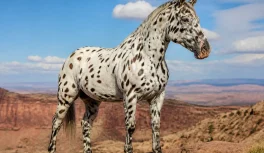
Appaloosa patterns: leopard, snowflake, and blanket patterns also appear in the breed as a result of the diverse genetic influences in the breed’s development.
Dun: classic dun with a dorsal stripe is also present.
The Missouri Fox Trotter’s mane and tail are typically long and full — an aesthetic characteristic the breed maintained and that contributes to its striking appearance in the show ring.
Gait as Part of the Standard
Unlike many breeds where conformation and gait standards are separate evaluations, in the Missouri Fox Trotter they are deeply interconnected. The MFTHBA evaluates both physical conformation and the quality and authenticity of the fox trot in its shows, and the two aspects are inseparable in the selection of quality breeding horses.
A Missouri Fox Trotter with perfect conformation but irregular or compromised gait is not an ideal representative of the breed. A horse with an exceptional fox trot but structural conformation issues will likely develop physical problems that limit its working longevity. The ideal standard combines both elements.
This integration of conformation and gait is what makes evaluating a Missouri Fox Trotter a task requiring breed-specific knowledge — and what distinguishes serious breeders from those who simply sell horses with attractive coloring.