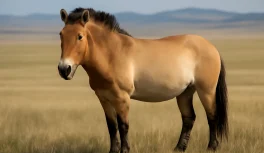
In the Argentine pampas of the 19th century, one of the most fascinating stories in equine breeding history began to take shape. A man named Patrick Newtall had somehow discovered — or perhaps developed — a group of horses of extraordinarily reduced proportions that, despite their size, retained the refinement and proportions of noble breeds. When his daughter married Juan Falabella in the mid-19th century, that knowledge passed to the family who would eventually lend the breed its name. And so began the Falabella — the most famous, the rarest, and for many the most beautiful miniature horse in the world.
The Falabella Family and the Making of a Breed
The breed’s official narrative begins with Patrick Newtall, who kept small-statured horses in Argentina around 1840. The exact origins of these animals remain debated: some researchers argue they descended from horses brought by Iberian settlers to South America, isolated populations that developed natural dwarfism over generations. Others suggest there were deliberate crossings with small-statured pony breeds.
When Juan Falabella inherited the breeding knowledge from his father-in-law, he took the work to a significantly more sophisticated level. Over decades, Juan and his successors — his son Emilio and later Julio César Falabella — worked to stabilize the breed’s size and characteristics, incorporating blood from breeds including the Welsh Pony, Shetland, and crucially, the Thoroughbred and Arabian to refine the type and eliminate undesirable traits.
The result, after more than 150 years of selective breeding, is a breed with stabilized genetic characteristics, registered and internationally recognized: the Falabella Miniature Horse.
What Makes the Falabella Different
The Falabella distinguishes itself from other miniature breeds through a combination of characteristics that make it genetically and visually unique:
Extreme reduced size: the Falabella is consistently smaller than the American Miniature Horse. While the American typically stands between 30 and 38 inches, a pure Falabella usually falls between 24 and 34 inches, with exceptionally small individuals reaching 18–20 inches. This consistency in minimal size is what led to the popular description of “world’s smallest horse.”
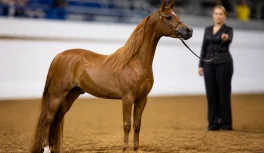
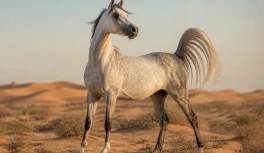
Refined horse proportions: unlike many miniatures, which carry pony traits, the pure Falabella has conformation very close to a Thoroughbred or Arabian in miniature. Refined head, concave or straight profile, arched neck, well-proportioned limbs, and smooth hindquarters. Experienced judges often describe a high-quality Falabella as a compressed Thoroughbred.
Rib and vertebrae count: some studies and breeders claim the Falabella has one fewer pair of ribs and a reduced number of lumbar vertebrae compared to full-sized horses — a characteristic that, if consistently confirmed, would be unique among equine breeds. This trait would contribute to the breed’s characteristically shorter dorsal line.
Stabilized genetics: the pure Falabella passes its characteristics to offspring with high consistency — a hallmark of a well-established breed. Indiscriminate crossings with other miniature breeds quickly dilute these traits.
Estancia Falabella and Official Registration
The Falabella family maintains Estancia El Cardal in Buenos Aires Province to this day as the breed’s reference stud farm. It is from there that animals considered pure are registered with the Falabella Miniature Horse Association (FalMHA) and the Asociación de Criadores de Caballos Falabella (ACCF).
The breed registry distinguishes between:
- Pure Falabella: descended from registered animals at Estancia Falabella, with traceable pedigree
- Registered Falabella: animals that meet the breed’s physical standard but may have only partially documented pedigree
The price of a registered pure Falabella is substantially higher than that of any other miniature breed — reflecting both rarity and the prestige of the name.
Coat Colors and Varieties
The Falabella accepts virtually all equine coat colors and patterns, which is one reason the breed attracts collectors and breeders with diverse aesthetic preferences. Among the most valued coats in the marketplace:
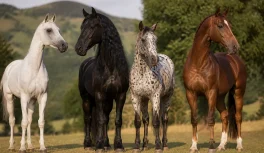
Roan: the mixture of white hairs blended through the base coat creates a unique visual effect that shifts with the seasons. Highly valued at shows.
Pinto and tobiano: patterns of white markings over a colored base coat. Highly sought after in the North American and European markets.
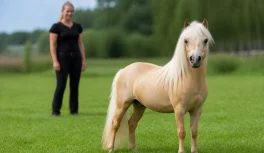
Palomino and buckskin: the golden coat with flaxen or dark mane and tail is consistently among the most sought-after colors for collectors.
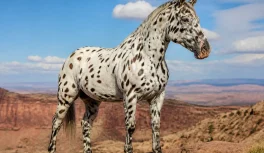
Appaloosa: the characteristic spotted pattern, inherited from historical crossings. Rare in the pure Falabella, highly valued when it appears.
True black: difficult to obtain without dilution to roan or another pattern. Pure black animals are rare and prized.
The Falabella Around the World
Throughout the 20th century, the Falabella family began exporting animals to breeders worldwide. Today there are established Falabella populations in the United States, Canada, the United Kingdom, Germany, the Netherlands, Australia, and beyond.
In the United States, the breed is registered through the Falabella Miniature Horse Association. In many countries, animals sold as “Falabellas” are crosses with other miniature breeds that meet the physical type but lack traceable pedigree to Estancia El Cardal.
Can the Falabella Be Ridden?
This is one of the most frequently asked questions — and the answer requires nuance. The Falabella was not developed for riding, and the vast majority of individuals have a physical structure that cannot support an adult’s weight without risk of joint and spinal injury.
However, very small children (under 55 lbs / 25 kg) can be briefly seated on the back of robustly built Falabellas under professional supervision. There are records of leadline competitions (child on horseback led by a walking adult) featuring Falabellas in the United States.
The breed’s primary functions are: companion animal, show horse, driving horse (pulling small vehicles), and increasingly, therapy animal.
Breeding a Falabella: Responsibilities and Requirements
Breeding quality Falabellas is a long-term commitment that requires:
Controlled feeding: like all miniature horses, the Falabella is extremely susceptible to obesity and laminitis. Diet must be based on low-energy hay, mineral salt, and constant access to fresh water.
Breed-specific veterinary care: teeth, hooves, vaccinations, and deworming follow the same protocol as full-sized horses, with the critical difference that drug dosages must be calculated on the animal’s actual bodyweight. Dosing errors are proportionally more dangerous in animals of 110–200 lbs (50–90 kg) than in animals of 1,100 lbs (500 kg).
Supervised delivery: dystocia is a real risk in Falabella mares. Foals can be disproportionately large relative to the birth canal. Experienced breeders always recommend having a veterinarian or trained professional present during delivery.
Socialization: like all equines, the Falabella is social and suffers psychologically in isolation. They need company from their own kind or from compatible animals.