Every experienced rider who has switched from a trotting horse to a gaited horse goes through the same moment of recalibration. The impact disappears. The back, which had been absorbing the diagonal rhythm of the trot for years, suddenly has nothing to absorb. What was work becomes effortless.
The smooth-gaited horse breeds of the world arrived at this solution independently, on different continents, in different centuries, through different selective pressures. But the result is similar: a lateral four-beat gait that eliminates the suspension phase of the trot and delivers the rider a ride that can last eight, twelve, or fifteen hours without destroying the back.
This is a guide to the most important gaited breeds in the world — what distinguishes each, where they excel, and how they compare to each other.
What Makes a Horse “Gaited”?
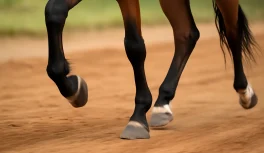
The common thread among gaited breeds is the lateral four-beat amble — a gait in which the legs move in sequence (right rear, right front, left rear, left front) rather than in diagonal pairs as in the trot. Because the horse always has two or three hooves on the ground, there is no suspension phase, no moment of falling, no vertical impact transmitted to the rider.
Modern genetic research has identified the DMRT3 gene as playing a central role in this gait pattern. A specific mutation in DMRT3 allows horses to produce lateral ambling gaits that would otherwise be neurologically blocked by the standard trotting wiring. This mutation appears independently across multiple breeds on multiple continents — a remarkable case of convergent evolution in horses selected for rider comfort.
The Paso Fino
Origin: Iberian Peninsula → Caribbean (Puerto Rico, Colombia, Venezuela, Dominican Republic)
Gait: Paso fino (exhibition), paso corto (work), paso largo (speed) — all lateral four-beat
Distinctive quality: The most refined and precise gaited breed in the world. The paso fino — the slow exhibition gait — is a metronome: rapid, collected, absolutely regular footfalls with minimal ground clearance. The “smoothness” is not just comfort but precision.
Strengths: Unmatched comfort, strong brio and rider engagement, compact athletic conformation
Limitations: Smaller stature (14–15.2 hh), less raw endurance output than larger breeds in extreme endurance events
The Mangalarga Marchador
Origin: Brazil (Minas Gerais) — Lusitano × Alter Real × local Criollo crosses
Gait: Marcha batida (diagonal tendency with triple-support) or marcha picada (lateral)
Distinctive quality: The best-documented endurance gaited breed in the world. The Prova de Marcha em Resistência — 60–190 mile events over natural terrain — is the breed’s supreme test. No other gaited breed has a formal endurance competition tradition at this scale.
Strengths: Outstanding endurance, terrain versatility, robust conformation suited to demanding field work
Limitations: Two gait variants (batida vs. picada) can confuse buyers — selecting the right type matters for ride quality
The Tennessee Walking Horse
Origin: United States (Tennessee) — Thoroughbred, Standardbred, Narragansett Pacer, Morgan crosses
Gait: Running walk — a flat-footed, lateral four-beat gait with characteristic head nod
Distinctive quality: The definitive American gaited breed. The running walk is smooth, ground-covering (up to 12 mph), and distinctive — the head nods in rhythm with each stride, a visual signature unique to the breed.
Strengths: Excellent temperament, strong American show tradition, versatile from trail to pleasure to competitive showing
Limitations: Show industry controversy around “big lick” performance (exaggerated action produced through controversial training and equipment); natural-gaited Tennessee Walkers without show training are very different animals from show-ring horses
The Missouri Fox Trotter
Origin: United States (Missouri Ozarks)
Gait: Fox trot — the front hooves walk while the hind hooves trot, creating a broken diagonal gait that is smoother than a true trot but not a pure lateral amble
Distinctive quality: The most terrain-capable American gaited breed. The fox trot was developed specifically for working cattle on the rugged Ozark terrain — steep, rocky, unpredictable.
Strengths: Exceptional terrain ability, sturdy conformation, reliable temperament, excellent cattle work
Limitations: The fox trot is technically not a pure four-beat lateral gait — it produces some impact, though much less than a standard trot. Riders with severe impact sensitivity may prefer the Paso Fino or Tennessee Walker.
The Icelandic Horse
Origin: Iceland — isolated population descending from Norse settlers’ horses, with no outside blood since the 10th century
Gait: Tölt (four-beat lateral amble) and skeid/flying pace (two-beat lateral gait — the fastest gaited gait in the world)
Distinctive quality: The only breed with five gaits (walk, trot, canter, tölt, flying pace). The flying pace — performed at speeds up to 30 mph — is one of the most spectacular equine gaits in existence. The Icelandic horse is small (13–14 hh) but carries adults with surprising power.
Strengths: Five gaits, extraordinary stamina and hardiness (adapted to subarctic conditions), docile and people-oriented temperament, extremely long lifespan
Limitations: Small size limits use for larger riders; export from Iceland requires strict quarantine protocols; returning a horse to Iceland after export is permanently prohibited by Icelandic law
The Peruvian Paso
Origin: Peru — Spanish colonial horses, isolated development over four centuries
Gait: Paso llano (smooth, lateral four-beat) with characteristic termino (outward arc of the front legs)
Distinctive quality: The termino — the lateral rolling motion of the front legs — is a breed signature unique in the gaited world. It produces no additional impact; it is purely visual, but unmistakable. The Peruvian Paso is also noted for its brio and the arrogance (natural elevated carriage) it maintains in gait.
Strengths: Exceptional smoothness and elegance, strong brio, very distinct visual presence
Limitations: Relatively rare outside Peru and the United States; smaller gene pool means finding quality animals requires more effort
The Standardbred (Pacer)
Origin: United States — harness racing breed
Gait: Pace — a fast lateral two-beat gait performed in harness at racing speeds
Distinctive quality: Technically a gaited breed (the lateral pace), but bred for racing rather than rider comfort. Off-the-track Standardbreds with pacing gait can be converted to pleasurable trail horses with retraining, and their smooth lateral gait becomes a comfort asset under saddle.
Strengths: Athletic, sound, available in large numbers at reasonable prices after racing retirement; often very willing temperaments
Limitations: Bred for harness, not saddle; requires retraining; pace at trail speed (rather than racing speed) must be developed