Two breeds. Two American origins. One shared miracle underfoot: a gait so smooth the rider seems to float above the saddle. When it comes to Mangalarga Marchador vs Paso Fino, the question isn’t which breed is better — it’s which one fits your riding style, your goals, and the kind of relationship you want with a horse.
The Mangalarga Marchador was born in Brazil, shaped by the highland fields of Minas Gerais and the spirit of the cattle-driving tropeiro. The Paso Fino emerged from Spanish colonies in the Caribbean and Americas, carrying Iberian blood refined over centuries of deliberate selection for gait. Both are smooth-gaited, four-beat horses — but with distinct personalities, uses, and markets. This article puts them side by side so you can make the right call.
What Is a Smooth Gait and Why Does It Matter?
Before comparing the breeds, it helps to understand what unites them: a smooth, four-beat lateral gait, known variously as amble, march, or paso.
Conventional horses like the Quarter Horse or Thoroughbred move at the trot — a two-beat diagonal gait in which paired legs move together, creating a vertical bounce that forces the rider to post or absorb impact. In gaited breeds, all four feet move in independent sequence, distributing impact and producing a gliding sensation.
The practical value is enormous. Tropeiros and vaqueiros who spent twelve hours a day in the saddle needed horses that wouldn’t destroy their backs or demand constant physical effort to ride. Both the Mangalarga and the Paso Fino solved that problem elegantly — but in slightly different ways.
Mangalarga Marchador: Brazil’s National Horse
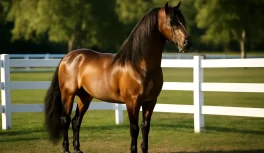
The Mangalarga Marchador is Brazil’s most numerous equine breed — and one of the most populous in the world, with over 600,000 registered animals. It was developed in the nineteenth century in Minas Gerais, by crossing Alter Real Portuguese stallions with local mares. The result was a medium-sized, athletic horse with a distinctive, reliable gait.
The Mangalarga gait comes in two recognized variations:
Marcha batida: four regular beats in a diagonal-lateral pattern, producing a mild lateral sway for the rider — comfortable and rhythmic.
Marcha picada: a gait with triple-support phases (three feet on the ground simultaneously), producing an even smoother, more linear sensation — often described as riding on rails.
The breed standard recognizes both gaits, and high-level horses compete in Provas de Marcha (gait trials) and Cavalgadas (multi-day trail endurance events covering hundreds of kilometers of natural terrain). This stamina is one of the breed’s most celebrated qualities.
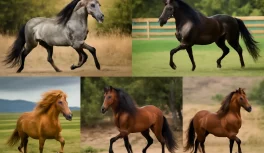
Typical conformation: Medium build (14.3–15.2 hands), expressive head with straight or slightly convex profile, arched neck, muscular rounded hindquarters. Coat colors vary widely — bay, chestnut, roan, gray, pinto.
Who is the Mangalarga for? Riders seeking versatility — a horse that can compete in formal gait trials, handle long trail rides, do ranch work, and still be safe for the family. It’s a democratic breed, with entry-level horses for beginners and elite-level animals for competitors.
Paso Fino: The Smoothest Step on the Planet
The Paso Fino — literally “fine step” in Spanish — is a breed developed in the Spanish colonies of the Americas, with deep roots in Puerto Rico, Colombia, and the Dominican Republic. Its ancestors were the horses brought by Spanish explorers in the sixteenth century: Andalusians, Barbs, and the now-extinct Spanish Jennet — Iberian breeds that naturally carried lateral gaits.
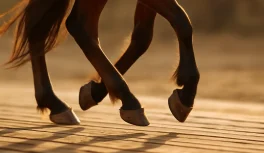
What sets the Paso Fino apart from every other breed in the world is the fineness and speed of its gait. The paso fino gait has four rapid, brief beats — to an outside observer, the hooves seem to barely touch the ground before returning to the air. For the rider, it is the smoothest riding experience ever documented: nearly zero vertical impact, zero lateral sway.
The gait variations:
Paso fino: The most collected, finest gait. Maximum cadence, minimal stride length. It’s the show gait — highly admired in formal competitions.
Paso corto: Greater stride reach, maintaining smoothness. The trail gait — covering ground efficiently without sacrificing comfort.
Paso largo: The breed’s fast gait — the horse extends fully, reaching speeds comparable to a canter while maintaining lateral smoothness.
Typical conformation: Smaller than the Mangalarga (14–15.1 hands), refined head, well-set neck, compact topline, lean elegant musculature. Coat colors vary widely — bay, chestnut, gray, black are common.
Head-to-Head Comparison: The Differences That Matter
Which is smoother in the saddle?
To answer honestly: the Paso Fino, at its finest show gait, likely delivers the smoothest ride of any gaited breed in the world. The speed and brevity of the steps create a sensation riders describe as “sitting in a moving armchair.”
The Mangalarga Marchador — especially in the marcha picada — also delivers an exceptional ride, with the advantage that its gait is more easily maintained over varied terrain and long distances. The Paso Fino at its finest show gait requires specific conformation and tends to be harder to sustain for hours on difficult trail terrain.
Verdict: Paso Fino for maximum smoothness in shows and shorter rides. Mangalarga Marchador for consistent comfort on long distances and varied terrain.
Which is easier to find and buy?
In Brazil, there’s no comparison: the Mangalarga Marchador dominates the market. With over 600,000 registered animals and breeders in every state, finding a quality Mangalarga is straightforward regardless of region. The Paso Fino has a much smaller presence — there are quality breeders, particularly in southern Brazil and São Paulo, but the market is significantly smaller.
In the United States and Caribbean, the situation reverses: the Paso Fino has strong presence and the Mangalarga is growing. In Colombia and Puerto Rico, the Paso Fino is national cultural heritage.
Verdict: Mangalarga in Brazil. Paso Fino in the US/Caribbean/Colombia. Both available globally, but in different volumes by region.
Which has the easier temperament?
Both breeds are known for docility — with nuances. The Mangalarga Marchador is typically described as “cooperative and reliable” — a horse that works well with riders of different levels, including supervised beginners.
The Paso Fino has more temperament variability by region and bloodline. Colombian horses tend to be more spirited — valued by competitors. Puerto Rican and American horses tend to be gentler and more accessible.
Verdict: Mangalarga Marchador for temperament consistency. Paso Fino requires careful evaluation of the individual and bloodline.
Which is better suited for competition?
Both breeds have organized competition circuits — but in entirely different worlds. The Mangalarga has a well-structured system in Brazil — gait trials, endurance rides (Cavalgadas), and breed shows — regulated by the ABCCMM.
The Paso Fino has structured shows especially in the US, Puerto Rico, and Colombia, with classes by gait type and style. Competition is visual and technical — evaluating the fineness and uniformity of the paso fino gait.
Verdict: Depends on where you compete and what you’re after. In Brazil, the Mangalarga system is more accessible and widespread.
How to Choose Between the Two
The right choice depends on four questions:
1. Where do you live and compete? Brazil → Mangalarga. USA, Caribbean, or Colombia → Paso Fino is more accessible.
2. What’s your primary use? Long trail rides, ranch work, endurance competition → Mangalarga. Gait display, shows, comfort riding → Paso Fino.
3. What’s your experience level? Beginner → Mangalarga has a broader market with more accessible entry-level options. Experienced rider → both offer elite-level animals.
4. What’s your budget? The Mangalarga market in Brazil runs from R$8,000 to R$200,000+. Imported or show-line Paso Finos can cost more — but locally bred quality horses exist in comparable ranges.
Neither breed is “better.” Both are extraordinary. The right one is the one that solves your specific problem with excellence.