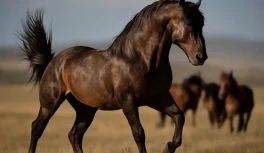
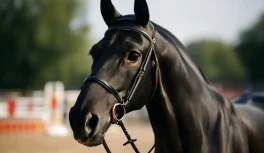
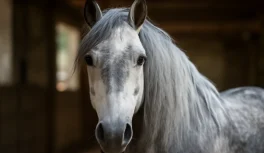
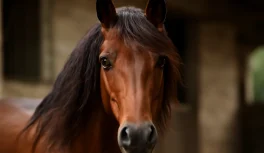
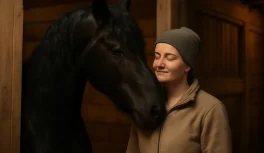
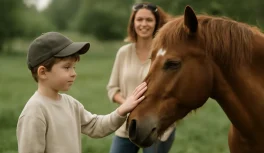
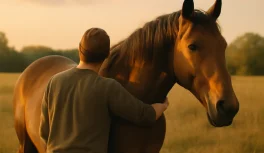
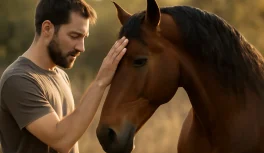
For a long time, attributing “emotional intelligence” to a horse sounded like anthropomorphism — a projection of human qualities onto an animal that couldn’t genuinely possess them. The science of the past two decades has changed that picture. Not because it discovered that horses are humans with four legs, but because it produced evidence that they possess sophisticated cognitive and emotional capacities operating according to a logic different from our own — and that in some respects, particularly in reading and responding to emotional states, they outperform what most humans manage to do consciously.
Horse emotional intelligence isn’t metaphor. It’s a documented set of capacities with identifiable neurological underpinnings and practical consequences for anyone who works, lives, or heals alongside horses.
What counts as emotional intelligence in animals?
The concept of emotional intelligence in humans, popularized by Daniel Goleman in the 1990s, includes capacities like recognizing one’s own emotions, managing emotional responses, recognizing emotions in others, and using that perception to guide social behavior.
In animals, scientific adaptations of the concept focus on two core axes: emotional perception (the capacity to detect and process emotional signals from other organisms) and emotional regulation (the capacity to adjust one’s internal state in response to the social environment).
Horses demonstrate capacities on both axes — and some of the most recent studies suggest that the depth of these capacities was systematically underestimated.
What has research shown about horses and human emotions?
The most cited study in this area was published in 2016 in Biology Letters by researchers at the University of Sussex. Horses were shown photographs of unfamiliar human faces expressing either anger or happiness. The results:
When shown angry faces, horses increased heart rate and turned to view the image with their left eye — behavior associated with negative threat processing in the brain’s right hemisphere. This lateralization is well-documented across multiple species and indicates that emotional threat processing occurs in a neurologically specified way.
When shown positive expressions, the response was neutral or mildly positive — without the left-eye lateralization.
What makes this result remarkable is that the horses in the experiment had never been exposed to the people in the photographs. They were reading emotions from the faces of strangers, in still photography, without any other contextual cues. The emotional reading was happening from facial expression alone.
Do horses remember emotional encounters?
Yes — with a persistence that surprised researchers.
A study published in Current Biology in 2018 by researchers at the University of Sussex and France’s National Institute of Agronomic Research investigated emotional memory in horses. The protocol: an unfamiliar human interacted with a horse in a first session with either an angry or happy facial expression — no physical threat, no reward, just expression and approach body language. Hours later, the same person returned with a neutral expression.
Horses that had been exposed to the angry expression in the first session responded to the person’s return — neutral expression and all — with elevated vigilance, higher heart rate, and significantly lower willingness to approach. Those exposed to the happy expression showed greater openness to contact.
The horses had formed an emotional impression of a specific person and were applying that memory to guide behavior hours later — with the same individual in a different emotional state.
Do horses have empathy?
The word “empathy” carries significant philosophical weight when applied to non-human animals, and the scientific community maintains reasonable caution. What the data shows is that horses demonstrate what researchers call emotional contagion and, in some cases, consolation behavior.
Emotional contagion is the tendency of an organism to adopt the emotional state of a nearby organism — without deliberate learning involved. In horses, this manifests clearly in herd dynamics: when one herd member enters a state of alarm, others respond almost immediately with similar activation, even without having detected the original stimulus. The emotional state “spreads” through the group.
Consolation behavior is more complex. In field observations and controlled studies, horses have been recorded approaching herd members in visible distress, offering physical contact (grooming, neck contact), and remaining close for extended periods. Similar behavior has been recorded in horses exposed to humans in intense emotional distress.
Whether this constitutes “empathy” in the fullest sense — with internal representation of the other’s state — is still debated. But functionally, the horse is responding to another’s emotional state in a way that has a regulatory effect on the being in distress.
How does equine emotional intelligence compare to other animals?
This comparison is methodologically challenging, because different species have different channels of emotional perception and expression.
What can be said based on current literature:
Horses outperform dogs in perceiving static human facial expressions — possibly because their panoramic vision and lateral resolution make them particularly sensitive to variation in expression.
Horses show long-term emotional memory comparable to what is observed in elephants — another highly social animal with a nervous system well-developed for intragroup communication.
Horses respond to the cardiac electromagnetic field of other species in ways that have not been documented with the same consistency in dogs, cats, or non-human primates — suggesting a particularly developed channel of bioelectric perception.
What does this change about how we treat horses?
The accumulated evidence on equine emotional intelligence has ethical implications that have not yet been fully absorbed by the horse industry.
If horses form emotional memories of interactions with humans, if they detect our internal state with accuracy, if they respond to negative emotions with prolonged vigilance — then the emotional management of human-horse interactions isn’t optional. It’s not about being “nice” as a personal preference. It’s about creating conditions in which the animal can genuinely collaborate, rather than simply comply under pressure.
Methods that create chronic fear states don’t just produce horses with behavioral problems. They produce horses with emotional memories marked by negative experiences that persist — and that influence every future interaction with humans, even with individuals who caused no harm.
Horse emotional intelligence is simultaneously the explanation for its extraordinary therapeutic capacity and the ethical responsibility carried by everyone who works with horses. They are present in a way we rarely fully grasp — and they are remembering what we do in that presence.