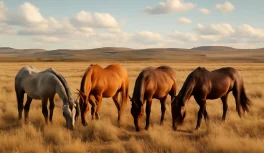
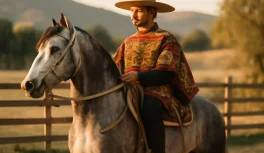
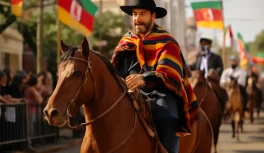
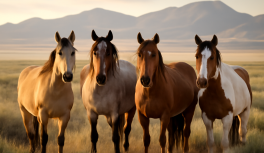
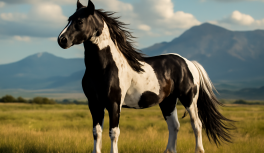
The Chilean Criollo is one of those horses that can fool you at first glance — compact, understated, easy to overlook. But watch it work in a rodeo arena or on a working ranch, and you’ll understand quickly why this breed has earned respect well beyond Chile’s borders. It is functional to its last vertebra, brave without being reckless, and above all, shaped by centuries of real work — not by show-ring fashion.
In this article, we’ll walk through the origins, characteristics, and influence of the Chilean Criollo, including its significant impact on Brazilian Crioulo breeding, in plain language for horse lovers.
The Chilean Criollo: An Ancient Breed, Shaped by Time
The Chilean Criollo is considered one of the oldest horse breeds on the American continent still maintained in a relatively pure and organized form.
Its formation began with horses brought by the Spanish to the region of present-day Chile. Over the centuries, these horses were crossed with:
- Arabian-origin horses, which contributed stamina and refinement
- Spanish mestizos, with strong Andalusian influence
- Pampa horses, rustic and adapted to the variable climate of the Southern Cone
The result was a compact, resilient, fast, and highly functional horse for cattle work across often difficult terrain — with slopes, descents, and uneven ground.
Over time, this combination of traits made the Chilean Criollo essential to rural Chilean life: accompanying cattle drives, pulling, herding, spinning on its own axis to hold cattle against a fence.
A horse built for work — not for looks.
A Horse Built for Function First
The defining mark of the Chilean Criollo is that it was selected based on function, long before any “modern” concern with show ring standards or fashion.
Its standout qualities include:
- Physical endurance — sustains long workdays without fatigue
- Speed and explosive acceleration — launches from a standstill to pursue cattle
- Trainability — learns quickly and responds well to consistent handling
- Intelligence and the right temperament — alert and lively, without being unbalanced
By the 19th century, Chile valued this horse so highly that in 1820, it sent specimens of the breed as a gift to King George IV of England — a clear signal of prestige.
In 1844, Chilean breeders organized into an association and began systematic selection based on function: a horse had to perform well to earn a place in the breeding program. This was a remarkably advanced approach for the era, and it helped consolidate the type we know today as the Chilean Criollo.
The Media Luna Revolution: Chilean Rodeo as the Breed’s Ultimate Test
A decisive chapter in the history of the Chilean Criollo came in 1946, when the rules of the Chilean rodeo on the Media Luna track were formally established.
The track is crescent-shaped — hence the name — and hosts a series of events designed to test the horse’s functional ability in working cattle. Some of these tests are particularly remarkable:
- Events that require the horse to remain perfectly still if the rider falls or sees someone fallen — safety built into the sport
- The test where two riders gallop side by side, pursuing cattle and pressing the animal against the inner wall of the arc — demanding coordination, strength, and balance
- The famous volapié, a movement where the horse spins rapidly on its own axis without forward movement — pure concentrated agility, comparable to the Quarter Horse spin
These demands transformed the Chilean rodeo into both a showcase for the breed and a selection tool: only horses with the disposition, strength, and composure to handle these challenges earned a place in the breeding pool.
The Chilean Criollo, therefore, stands on a clear three-legged foundation:
- Strong rural tradition
- Rigorous functional selection
- Sports competitions that replicate real cattle work
From Chile to Brazil: When the Chilean Criollo Crossed the Pampas
If you’re passionate about Brazilian Crioulo horses, you’ve likely heard that Chilean bloodlines entered the Brazilian breeding scene with force — especially from the 1970s onward.
That decade saw an intensification of Chilean Criollo imports into the state of Rio Grande do Sul. Several stallions became legends:
- La Invernada Aniversário — the first Chilean horse to stand at stud in Brazil
- Tren Tren Arrebol — sire of important producers like Pozo Azul Chacao and the famous La Invernada Hornero
- Trongol Pilpilco and Santa Elba Señuelo — both left their mark on important pedigrees
- Santa Elba Comediante, nicknamed “Cavalo Motor” (the Engine Horse) for his exceptional functional ability
Breeders, technicians, and horsemen who lived through that era often describe the arrival of Chilean Criollo blood as a “functionality shock” for the Brazilian Crioulo: more agility, more responsiveness, greater work capacity — without losing rusticity.
From that point, Chilean bloodlines became a significant presence in many of Brazil’s most celebrated pedigrees, helping shape the modern Crioulo seen today at Freio de Ouro competitions, rodeos, and field trials.
La Invernada Hornero: The Chilean That Changed Everything
When discussing the Chilean Criollo in the Brazilian context, it is nearly impossible not to mention La Invernada Hornero.
Born November 8, 1971, and deceased August 25, 1997, Hornero is widely recognized as the highest-scoring horse in the Merit Registry of the ABCCC (Brazilian Association of Crioulo Horse Breeders) and holds the absolute record for the number of winning offspring.
Among the achievements linked to his production:
- Records at Expointer — presenting in different years the grand champion, the reserve champion, and the third-best horse of the breed
- Occasions when he was the sire of both the grand champion stallion and the grand champion mare at the same event
Among his descendants appear names like Nobre Tupambaé, Itaí Tupambaé, Entrevero Charrua, Butiá Arunco, Faceiro do Junco, and Bt Bailongo, among many others.
It is no exaggeration to say that after him, many breeders began speaking of “Before Hornero and After Hornero.” His genetics profoundly influenced the type of Crioulo pursued in Brazil: a functional, beautiful, well-structured animal — above all, competitive in arena events and field trials.
Conformation: Small Frame, Giant Delivery
Visually, the Chilean Criollo fits within the general type of the Pampas Criollo, with some particularities.
In general terms, Criollo horses — including the Chilean — present:
- Average height: 13.5 to 14.5 hands (1.38–1.50 m)
- Compact body with good rib depth
- Strong hindquarters, ready to launch and spin
- Solid bone structure and hard hooves, well adapted to varied terrain
- Short head, alert eye, strong but proportional neck
The Chilean Criollo, in particular, tends to draw attention for:
- Being notably muscular and lean, with minimal excess weight
- Projecting a “ready to work” demeanor — always switched on
- Showing exceptional responsiveness to the rider’s aids
In terms of temperament, what breeders seek is a horse that is:
- Courageous — doesn’t back down in front of cattle
- Agile, with good motor coordination for the demands of the Media Luna
- Light in the mouth and responsive to rein — allowing precise, elegant work
It is the kind of horse that, even without being large, gives the impression of being capable of any task on a working ranch.
The Connection with Gaúcho Culture: A Natural Affinity
It is no coincidence that Brazilian gaúchos fell in love with the Chilean Criollo. In both Chile and Rio Grande do Sul, horse culture is deeply tied to:
- Rural life and ranch work
- The tradition of rodeos and cattle events
- The figure of the ranch hand — the huaso in Chile, the peão in Brazil
When Chilean Criollo blood reached the Brazilian pampas, it found an audience that knew exactly what to do with it: put it to work, test it in competition, use it in the field, and value its pedigree in conformation shows.
Over the years, this bridge between Chile and Brazil has only strengthened. Many Brazilian breeders still seek specific Chilean bloodlines to reinforce:
- Functional ability
- Temperament balance
- The capacity to spin, drive, and hold cattle with efficiency
Why the Chilean Criollo Wins Over Even the Uninitiated
Even someone with no knowledge of pedigrees or breed history tends to be impressed when they see a Chilean Criollo in action.
In a Media Luna, a Freio de Ouro trial, or any functional competition, the horse appears:
- Small, but powerful
- Fast, but controlled
- Strong, but flexible
This combination of power and balance resonates with anyone who loves horses. The Chilean Criollo projects the feeling of being an honest horse — one that commits fully to the task, trusts its rider, and holds nothing back when doing what it knows how to do.
To the untrained eye, it might look like “just a horse, a bit on the small side.” But to those who ride, train, or observe closely, the Chilean Criollo is often synonymous with functionality elevated to its highest expression.
The Legacy of the Chilean Criollo
The Chilean Criollo is, at once, inheritance and transformation.
It inherited from its Iberian ancestors and the Pampas horses the resilience, rusticity, and strength. It was transformed over centuries by breeders who chose, with rigor, which animals deserved to keep producing. It was proven in practice — in the dust of rodeo arenas, through the curves of the Media Luna, in the early morning hours of cattle work.
When its bloodlines crossed the border to enrich the Brazilian Crioulo, they sent a clear message: functionality never goes out of style.
Today, looking at a Chilean Criollo means seeing condensed into one compact frame:
- History
- Culture
- Work
- Tradition
And the passion of generations for this small but great horse — which may not be the tallest in the herd, but is rarely the one that delivers the least.