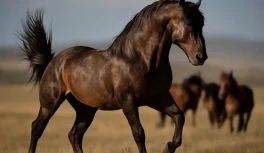
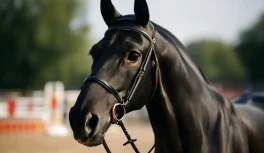
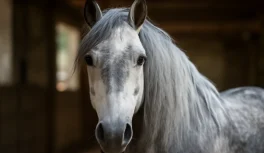
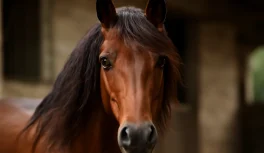
Something about adopting a mustang sounds different from buying a horse. There’s no transaction that captures it — just a person, an animal that has never known human hands, and a decision to bridge that gap. For the right person, at the right moment, mustang adoption is one of the most rewarding things equestrian life offers. For the wrong person, it can be an expensive and discouraging experience for both sides.
This guide exists to help you figure out which side you’re on — before you sign anything.
What Is the Adoption Process?
In the United States, where most free-roaming mustangs live, the Bureau of Land Management (BLM) oversees wild horse and burro populations on federal land. When a herd grows beyond the land’s carrying capacity, horses are removed and held in off-range corrals. That’s where adoption programs come in.
Through the BLM’s adoption program, anyone who meets basic eligibility requirements can adopt a mustang at an accessible fee. The Mustang Heritage Foundation, a nonprofit, also connects mustangs with potential owners through education and events like the Extreme Mustang Makeover.
Outside the US, independent organizations work with mustangs through rescue programs — but the legal specifics vary, and it’s worth researching what’s available in your country.
What Kind of Horse Will You Get?
There’s no single “type.” Depending on the source, you could receive:
Completely untouched: came directly from a wild herd. Has never had meaningful human contact. Requires a full gentling process from scratch.
Halter-started: has been through basic initial handling — accepts a halter, allows approach, may lead on a rope. Still needs significant work, but is a step ahead.
Gentled: has completed a more thorough program, accepts touch, basic handling, and possibly early groundwork under saddle. The most approachable profile for riders with moderate experience.
What You Need Before You Look
Solid physical infrastructure
Your facility needs to be safe and secure from day one — especially if your mustang arrives untouched. Solid fencing, appropriate height, no exposed sharp edges. A separate pen or paddock for initial adjustment is nearly essential.
A quarantine period: even a few days separated from other animals helps you assess health and behavior before full integration.
Real time — not theoretical
This is where most estimates fall short. An untouched mustang can take three to six months just to consistently accept being touched. Basic training can mean one to two years of regular work. If you have an hour free on weekends, be honest with yourself: it may not be the right moment.
Experience with difficult horses, or access to a professional
You don’t need to be an expert trainer — but you do need access to one. Working a mustang with no background in reactive or frightened horses is a reliable recipe for accidents and frustration for both of you.
The patience not to take behavior personally
A mustang that backs away, strikes, or refuses approach isn’t “being difficult with you.” It’s being a horse with a survival history. Taking that behavior personally is the shortest path to giving up.
The First Days at Home
Arrival and adjustment
Give the horse a calm, restricted space away from too many new stimuli. Water, hay, and quiet. Observe from a distance before any active approach.
In the first few days, a routine of calm presence — showing up at the same time, slow movements, steady voice — is already work.
First approach
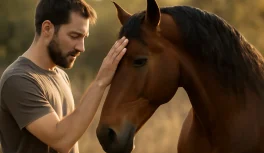
Use approach and retreat: move a little closer, stop before the horse reacts, retreat before a flight response. You’re teaching that your presence is not a threat — and that lesson takes time, not force.
For many mustangs, the first touch takes weeks. That’s not failure — it’s a milestone.
The sequence of milestones
Tolerating human presence → accepting touch on the neck → accepting the halter → leading on the halter → accepting spray and objects → accepting touch across the whole body → accepting the saddle → accepting weight.
Each milestone has its own timeline. There are no shortcuts that don’t create problems later.
Common Mistakes in Mustang Adoption
Underestimating the time. Plan for a long journey — and celebrate small milestones along the way.
Skipping steps because “he’s almost there.” Rushed work creates gaps that surface later, often in dangerous situations.
Isolating the horse. Mustangs are social animals. Visual contact with other horses helps enormously with emotional stability, especially early on.
Not having veterinary support lined up. Adoption typically includes initial vaccinations and microchipping, but verifying the health history and having a trusted vet available is essential.
Is It Worth It?
For the right person, at the right time: absolutely.
What you gain at the end of a well-run process is hard to put a price on. It’s a horse you know from the inside — one you built real trust with, not bought. Many adopters say the relationship with a gentled mustang is unlike any they’ve had before.
But the process demands honesty: about time, experience, infrastructure, and expectations. When all of those line up, mustang adoption isn’t just an act of generosity — it’s one of the most genuine adventures equestrian life has to offer.