Every breed carries the mark of the land and the people who created it. Tennessee Walking Horse history is the story of farmers who needed comfort for long days in the saddle, of crosses chosen with patience, and of a black stallion who failed on the harness-racing track but went on to sire an entire breed. In this article, you will follow that journey from 19th-century Middle Tennessee to breeding farms on several continents.
Where Does Tennessee Walking Horse History Begin?
Tennessee Walking Horse history begins in Middle Tennessee during the 19th century. There, settlers arriving from neighboring states crossed gaited horses with saddle and trotting breeds to produce a comfortable, hardy, versatile animal that could cover large farms for hours without tiring its rider.
That is the short version. But as in any good story, the details make the difference.
A Landscape Made for Riding
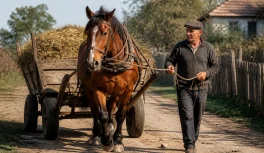
Middle Tennessee is a region of rolling hills, fertile soil, and generous pastures. In the 19th century, the local economy revolved around agriculture, with sprawling farms that needed constant oversight. Roads were rough, and the horse was the main way to get around.
Against that backdrop, a landowner spent much of the day on horseback, riding from one field to the next. A horse that trotted all the time made those trips exhausting. What farmers wanted was a smooth-gaited horse, fast enough to cover ground and calm enough for anyone in the family to ride.
That is why these horses were first known simply as farm or plantation horses, a nod to the large estates where they worked every day. There was no defined breed yet, but there was already a very clear picture of the ideal horse.
The Breeds Behind the Smooth Gait
Above all, Tennessee Walking Horse history is a story of blending. Several bloodlines contributed to the Tennessee Walker, each adding a particular quality.
The Old Pacers: Narragansett Pacer and Canadian Pacer
Among the most frequently cited ancestors are the Narragansett Pacer, a gaited breed developed in the northeastern United States and now extinct, and the Canadian Pacer, tied to Canadian horse stock. These horses were valued for their comfortable lateral gaits, and they passed on to their descendants a natural tendency to gait rather than trot.
Standardbred and Morgan: Stamina and Character
The Standardbred, an American breed developed for harness racing at the trot and pace, brought vigor, stamina, and a frame capable of sustaining fast gaits. The Morgan, one of the oldest breeds in the United States, contributed sturdiness, a cooperative temperament, and versatility.
Thoroughbred and American Saddlebred: Refinement and Elegance
The Thoroughbred added refinement, quality of bone, and energy. The American Saddlebred, another American saddle breed with a gaited tradition, contributed elegance, size, and presence.
Over several generations, this mix produced a horse that brought together the best of each: comfort, endurance, docility, and beauty. That is why Tennessee Walking Horse history is so closely linked to that of other American breeds. A close example is the history of the Missouri Fox Trotter, another gaited breed born of similar needs in a neighboring region.
Black Allan: The Stallion Who Changed Everything
No chapter in Tennessee Walking Horse history is more famous than that of Black Allan, the stallion recognized as the breed’s foundation sire.
A Trotter Who Preferred to Gait
Black Allan was foaled in the late 19th century from bloodlines linked to the Standardbred and the Morgan. Given his pedigree, he was expected to excel in harness racing. There was one problem: he kept moving in a gait of his own instead of the pure trot the track demanded. As a trotter, he was considered a failure.
What looked like a flaw, however, was exactly the quality Tennessee breeders were looking for. After passing through several owners, Black Allan ended up on a farm in Middle Tennessee, where he was used as a breeding stallion.
A Legacy That Spread
Bred to local mares with good gaits, Black Allan passed on his smooth gait, willing attitude, and balanced looks. His offspring quickly drew attention in the area. One of his best-known sons, Roan Allen, also became an influential sire and helped fix the traits we now associate with the breed.
When the breed was formally organized, Black Allan was registered as Allan F-1, with the “F” marking his status as a foundation horse and the number 1 his place of honor in the stud book. To this day, the breed’s story is told starting with him.
1935: The Breeders’ Association Is Born
During the early decades of Tennessee Walking Horse history, smooth-gaited horses existed without any formal registry. Each breeder kept personal records, and quality varied widely from one farm to the next.
In 1935, a group of breeders met in Tennessee and founded the breed’s official organization, the Tennessee Walking Horse Breeders’ Association. The goal was clear: register the horses, preserve bloodlines, protect the natural gait, and promote the breed beyond the state line. The organization later expanded its name to include exhibitors as well.
How Does a Stud Book Work?
A stud book is the official registry of a breed, recording each horse’s name, parentage, and characteristics. It makes bloodlines traceable and lets breeders make mating decisions based on reliable information. In practice, it is what turns a regional type of horse into a formally recognized breed.
From Official Recognition to State Symbol
With the association in place, the next step in Tennessee Walking Horse history was to consolidate the breed. In the decades after its founding, the stud book was closed, meaning only foals of registered parents could be recorded. That is a major milestone for any breed, because it signals that the type is fixed and that the horses pass on their traits consistently.
Official recognition followed, putting the Tennessee Walker firmly on the map of American horse breeds. Its popularity grew steadily, driven by the comfort of its gait and its reputation for a gentle temperament.
The bond with its home state became so strong that the Tennessee Walker was named the official state horse of Tennessee. It is a symbolic honor, but it says a great deal about the breed’s place in regional identity.
How Did the Tennessee Walker Spread Around the World?
Tennessee Walking Horse history did not stay confined to the American South. Over the 20th century, it spread throughout the United States and then crossed borders.
First, North America
In Tennessee Walking Horse history, the first wave of expansion was domestic. Riders in states across the country and in Canada discovered the comfort of the running walk and began breeding and importing horses. Today, the Tennessee Walker is one of the best-known gaited breeds in North America.
Then, Other Continents
Over time, horses were exported to Europe and other regions. Breeders and associations devoted to the Tennessee Walker emerged in several European countries, drawn by the same quality that won over 19th-century farmers: the chance to ride for hours in comfort.
International interest grew alongside equestrian tourism and pleasure riding. For many riders outside the United States, the Tennessee Walker is their gateway into the world of gaited breeds, along with names like the Paso Fino, the Icelandic Horse, and Brazil’s Mangalarga Marchador. To compare these journeys, explore our guide to smooth-gaited horse breeds around the world.
Why Did the Breed Cross Borders?
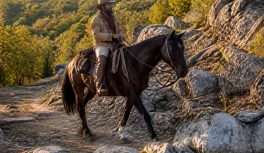
The short answer: comfort is universal. A rider in Germany, Canada, or South America wants the same thing a Tennessee farmer wanted more than a century ago: a reliable, smooth-gaited horse that is easy to live with. Today the breed is highly valued for its natural gait on pleasure and trail rides, which explains its presence in so many countries.
What Tennessee Walking Horse History Teaches Us
Looking back at Tennessee Walking Horse history shows how a practical need can give rise to something lasting. The breed was not born of an aesthetic whim but of the search for comfort in the daily lives of people who lived in the saddle.
A few lessons stand out:
- Breeding with purpose: breeders knew exactly what they wanted and stayed focused for generations.
- The value of an apparent “flaw”: Black Allan failed as a trotter precisely because he had the gait that would launch a breed.
- Organization matters: founding the association in 1935 turned a regional type into a recognized breed.
- Universal qualities travel far: comfort and a gentle temperament won over riders on several continents.
This journey also helps explain the Tennessee Walker’s place among the most popular horse breeds in the world.
Conclusion: From Tennessee Farms to Trails Worldwide
Tennessee Walking Horse history began with farmers who wanted to ride in comfort, ran through crosses between old pacers and saddle breeds, found an unlikely founder in Black Allan, and took formal shape with the breeders’ association in 1935. From Middle Tennessee, the breed spread across the continent and then around the world, carrying with it the smooth gait that makes it unmistakable.