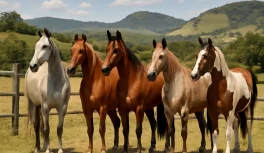
Watch the finish line at a major international endurance ride — a 100-mile FEI CEI* event — and you will notice a pattern almost immediately: most of the horses are Arabians. Lean. Light. Coats damp with effort, flanks rising and falling in a rhythm that soon slows, eyes still sharp after more than ten hours of work.
But what exactly makes an endurance horse different from any other? Is it just breed? Training? Genetic luck? The answer is more complex — and more interesting.
What Defines a Good Endurance Horse?
Before talking about breeds, it is worth understanding which physical and physiological characteristics make a horse suitable for the sport. The breeds that dominate endurance do so because they carry these characteristics in concentrated form — but an individual of a less typical breed with the right physiology can outperform animals from favored bloodlines.
Cardiovascular capacity: the heart and pulmonary system of an endurance horse must be efficient enough to sustain aerobic effort for many hours and recover rapidly at vet gates. Horses with larger hearts and well-developed cardiac chambers recover faster — directly determining whether they pass the checkpoints.
Light and dense bone structure: lighter bones reduce the energy cost of moving body weight across dozens of miles. Denser bones absorb the cumulative impact without developing microfractures or tendon injuries. Horses with heavy but porous bone carry a physiological disadvantage.
Efficient stride mechanics: horses that waste energy in excessive lateral movement or with a very short stride must work harder to cover the same distance. A long stride with good hindquarter impulsion and clean forehand movement is a measurable advantage over long distances.
Thermoregulation: the ability to dissipate heat is critical. Horses with fine coats and light-colored skin release heat more efficiently. Peripheral vasodilation — the increase of blood flow to the body’s surface — is a cooling mechanism that horses with efficient peripheral circulation use to greater effect.
Competitive temperament: successful endurance horses generally have a quality that is hard to quantify — the will to keep going. Horses that become tense, hyperactive, or resistant waste unnecessary energy. Horses that maintain a calm, steady rhythm are more efficient and more manageable.
Why Does the Arabian Dominate Endurance?
The Arabian horse is not merely popular in endurance — it is structurally superior to virtually every other breed for long distances. And that superiority is not cultural preference or competitive tradition: it is documented physiology.
Comparative studies show that the Arabian typically has one fewer lumbar vertebra and one fewer coccygeal vertebra than other breeds — creating a more compact topline and a back that transfers energy more efficiently. Its ribs are more arched, creating a larger thoracic cavity for the lungs. Its bones are denser relative to overall body weight.
But the most documented advantage is cardiovascular. At maximum effort, the Arabian’s peak heart rate is comparable to other breeds — but recovery rate is notably faster. A well-conditioned Arabian can drop from 180 bpm to 60 bpm within three to four minutes after the end of a loop. That is the parameter that decides races at vet gates.
The breed’s origins in the Arabian desert — with water scarcity, extreme temperatures, and the need to cover long distances to survive — shaped, over millennia, an animal biologically optimized for precisely what endurance riding demands.
Other Breeds That Compete in Endurance
Arabian dominance is not absolute. In national and regional events at shorter distances, the diversity of breeds is considerably greater.
Anglo-Arab: the cross between Arabian and Thoroughbred produces a horse that combines the Arabian’s cardiovascular endurance with the Thoroughbred’s size and stride length. In events of 75 miles or more, the Anglo-Arab appears consistently in European standings.
Thoroughbred: retired racehorses have been used in endurance with mixed results. The Thoroughbred has excellent cardiovascular capacity and an efficient stride, but tends toward nervousness and less efficient thermoregulation than the Arabian. Requires experienced riders.
Akhal-Teke: originating in Turkmenistan, the Akhal-Teke is one of the most resilient horses in the world. With a light build, characteristically metallic coat, and a history of long desert marches across the Karakum Desert, it is a natural endurance competitor. Less common in international circuits due to limited availability outside its region of origin.
Criollo: the South American breed developed in the pampas appears in regional events with regularity. The Criollo’s resilience is legendary — the Raid Criollo tests horses over long distances without concentrated feed, a stamina test without parallel. In standardized endurance events with conventional vet gates, the Criollo competes well up to 50–60 mile distances.
Marwari and Kathiawari: Indian breeds historically connected to cavalry in arid terrain. They appear in Asian events with consistent results but rarely reach the international circuit.
Fitness Training: How Endurance Horses Condition
A horse does not arrive ready for endurance. Conditioning is a process of months — sometimes years — before an animal is competitive at longer distances.
Aerobic base: the first months of endurance training focus exclusively on aerobic development. Long walks, moderate-paced trotting on varied terrain. The goal is to train the cardiovascular system to work efficiently over prolonged periods without demanding anaerobic effort.
Muscular conditioning: muscles and tendons must adapt to repetitive exertion. Progressive training — gradually increasing distance and intensity — allows that adaptation without injury. Horses pushed to distance too quickly develop tendon problems that end careers.
Metabolic adaptation: adequately trained horses develop greater capacity to use fat as fuel — which preserves muscle glycogen for intense efforts and extends endurance. This adaptation builds over weeks and months of training.
Terrain familiarization: endurance horses need to learn to handle varied terrain — loose rock, steep climbs, streams, bridges, other animals. Familiarization reduces stress and wasted energy in unexpected situations during competition.
What Age Do Elite Endurance Horses Peak?
Endurance horses have longer careers than show jumpers or racehorses — and this is a characteristic of the sport. Peak performance typically occurs between 9 and 14 years of age, when the horse has accumulated competitive experience, a conditioned cardiovascular system, and developed competitive composure.
The FEI sets 7 years as the minimum age for international competition — not by convention, but in recognition that the skeletal and tendon systems of young horses are still developing and cannot sustain long-distance effort without increased injury risk.
Horses aged 15, 16, or even 17 appear regularly on elite event podiums — a rarity in equestrian sport that reinforces endurance’s unique profile as a discipline.