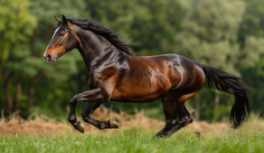
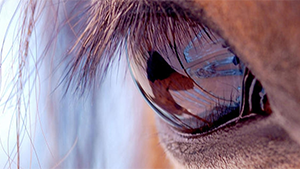
Imagine watching a herd cutting across the horizon—manes in the wind, golden dust rising like mist. It’s hard not to feel something “click” inside. The mustang has become synonymous with freedom, but the truth is even more interesting: it’s a horse with domestic roots that learned, over centuries, to survive like few others. And that explains not just the legend… but also the temperament, the tough build, and even the conservation controversies that still surround these animals today.
In this guide, you’ll understand what a mustang horse is, where it came from, how it lives, what its traits are, and why it holds such a big place in the culture of the American West—without easy romanticizing, but with the charm it deserves.
What a mustang horse is (and why it isn’t “wild” the way many people think)
The mustang is a free-roaming horse of the western United States, descended from horses brought to the Americas by colonizers—especially Spaniards—starting in the 16th century. So despite the common label “wild horse,” the more accurate classification is feral: an animal that was domestic at some point in history and returned to living without direct human management.
And there’s more: “mustang” carries the idea of “ownerless.” The term is often linked to Spanish mestengo/mustengo, associated with a horse “without an owner.”
That origin explains something crucial: mustangs aren’t a single standardized breed like an Arabian or a Quarter Horse. They’re a set of populations (herds) with variation in size, build, and even genetic traits—depending on the region and the history of each group.
The mustang’s history and origins: from Spanish hooves to an American myth
When European horses arrived in the Americas, some escaped, were released, or gradually dispersed. From there, free-living populations formed—and adapted to climate, terrain, and scarcity. The result is an animal shaped by natural selection and day-to-day survival.
As westward expansion and ranching grew, human relationships with these herds shifted between fascination and conflict. In some periods, populations dropped dramatically; in others, they grew—and sparked disputes over resources (water, forage, and space).
The law that changed the fate of “wild free-roaming horses”
A major milestone was the Wild Free-Roaming Horses and Burros Act (1971), which created federal protection for wild free-roaming horses and burros on public lands—recognizing them as symbols of the pioneer spirit of the American West and placing their management and protection under federal agencies.
In practice, that also opened the door to a sensitive topic: population management, removal of “excess” animals, and adoption programs—issues that still fuel intense debate today.
What mustangs look like: physical traits shaped by survival
Because there’s no single mustang “template,” measurements vary. Still, some patterns show up frequently:
- A compact, functional body—more energy-efficient
- Strong bone and tough hooves (highly valued for trail riding and rough terrain)
- Surefootedness and good mobility in demanding environments
- Endurance and hardiness as a signature
A mustang’s beauty isn’t only aesthetic—it’s practical. It’s the kind of horse that seems to say, without words: “I was built to handle it.”
Many coat colors and “different faces,” depending on the herd
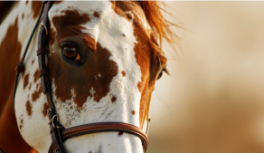
You can find mustangs in common coat colors (bay, chestnut, gray) and also in a wide range of patterns, because historical mixing (and crossbreeding over time) produced great phenotypic diversity.
Mustang temperament: intelligence, self-preservation, and loyalty (once you earn it)
If a mustang horse’s body proves survival, its temperament proves self-preservation.
In general, many mustangs are described as:
- alert and observant
- intelligent and quick to learn
- cautious with the unfamiliar (especially at first)
- very sensitive to consistency and predictability in handling
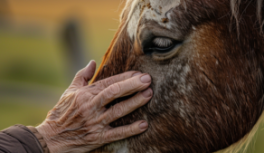
That doesn’t mean “aggressive.” It means: “I need to know you’re safe.” And here’s what captivates so many people: when a mustang trusts you, that trust tends to run deep—built, not bought.
Life on the range: how mustangs live in a herd
In free-roaming conditions, herds tend to develop social organization, routines, and survival strategies in harsh climates with limited resources. That background strongly influences how the horse later responds to humans.
What this teaches anyone who wants to work with a mustang
If you bring a mustang closer, you don’t “erase” its past. You translate that history into a safe routine:
- repetition without monotony
- clear boundaries
- consistent rewards
- time to process
- respect for space (especially early on)
Mustangs and conservation: why is it so controversial?
Conversations about mustangs almost always collide with three points:
- legal protection and cultural value (the horse as a symbol of the American West)
- environmental carrying capacity (forage and water on public lands)
- land-use conflicts (multiple-use management, livestock, wildlife, fires, local interests)
The 1971 law provides protection, but also calls for management to maintain “ecological balance” in those areas.
In the real world, though, “balance” becomes the argument: What number is sustainable? Which methods are ethical? What gets prioritized?
You can’t boil that down to one sentence, but you can be honest: today the mustang horse lives between the symbol and the system—and that’s where much of the challenge lies.
Adoption: when a mustang leaves the range and finds a home
Adoption programs exist to relocate animals and provide outcomes for some horses removed from public lands or holding facilities. Organizations like the Mustang Heritage Foundation work through education, events, and adoption incentives, along with initiatives that showcase a mustang’s versatility after responsible training.
What changes when you adopt a mustang
A mustang can become an incredible trail horse, a working partner, and even compete in disciplines—but the beginning requires:
- time (bonding and foundation)
- setup (a safe pen/stall and proper fencing)
- knowledge (groundwork, reading body language, patience)
And here’s the golden rule: a mustang isn’t a “quick project.” It’s a horse that asks for a process.
Riding a mustang: what is it good for?
The short answer: a lot—so long as you respect the profile of the horse and the rider.
Breed-profile sources often describe mustangs as versatile and capable across different disciplines, as well as strong trail companions.
What matters most is the path to get there: a solid foundation, progressive training, and consistency.
Are mustangs good for beginners?
It depends on what “beginner” means. If someone is starting from zero and wants a predictable, ready-to-go horse with a stable history, a newly adopted mustang usually isn’t the best first step. On the other hand, with professional support and a horse that’s already started and steady, it can be a wonderful—and transformative—experience.
Common myths about mustangs (and the truth behind them)
Myth 1: “Mustangs can’t be trained.”
Correction: many are very trainable and become excellent partners; what changes is that trust must be built.
Myth 2: “All mustangs are the same.”
Correction: there’s huge variation among herds and regions; it’s not a standardized breed.
Myth 3: “Mustangs are native wild horses of America.”
Correction: popular writing calls them “wild,” but they descend from domestic horses brought by Europeans; that’s why they’re feral.
Mustangs in culture: why do they move us so much?
Few animals have become such a powerful symbol of freedom as the mustang—and it’s easy to see why:
- it carries the image of an open horizon
- it represents resilience and adaptation
- it shows up in movies, books, songs, and the mythology of the “American West”
- it reminds us—almost poetically—that the world wasn’t made to be controlled all the time
No wonder that when people hear “mustang horse,” they don’t think first about measurements, weight, or coat color. They think about a feeling.
What the mustang teaches when we stop romanticizing—and start understanding
The mustang isn’t just “a beautiful horse from the American West.” It’s a living chapter of history: European origins, American adaptation, modern conflict, and a cultural presence that spans generations.
If you want to write, study, photograph, support conservation, or even adopt one day, the best way to honor a mustang is simple (and difficult): respect its timing. Because freedom, in the real world, isn’t a shout. It’s something you build.