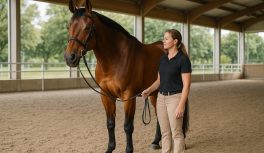
The combination of equine therapy and cerebral palsy is probably the most studied and documented application within the field of horse-assisted therapy. For decades, physical therapists, occupational therapists, and researchers have investigated what happens when a child or adult with cerebral palsy is positioned on the back of a moving horse — and the accumulated findings form an increasingly solid scientific picture.
This article presents what is known, what the research shows, and how equine therapy fits into cerebral palsy treatment in clinical practice.
Why Cerebral Palsy Responds to Equine Therapy
Cerebral palsy is a neurological condition caused by brain injury occurring before, during, or shortly after birth, affecting movement control and posture. Its manifestations vary widely — from mild coordination difficulties to severe motor impairment with intense spasticity.
The horse acts directly on the systems that cerebral palsy affects:
Walk Movement and the Pelvis
The horse’s walk produces approximately 110 movement impulses per minute — and that movement is three-dimensional (front-to-back, side-to-side, and rotational), closely replicating the pattern of the human pelvis during walking. For a child with cerebral palsy who has difficulty or cannot walk at all, riding a horse at a walk is the closest neuromuscular experience to walking available to them.
This stimulation activates the postural muscles of the trunk, works dynamic balance, and stimulates the proprioceptive system — all of which are frequently compromised in cerebral palsy.
Body Heat and Spasticity
The horse’s body temperature (between 99.5°F and 101.3°F) is transferred into the muscles of the pelvis and thighs during riding. This warmth promotes muscle relaxation and reduction of spasticity — one of the most limiting symptoms in many types of cerebral palsy. Hippotherapy sessions frequently produce windows of reduced muscle tone that allow more effective therapeutic work immediately after.
Continuous Postural Challenge
Maintaining a position on a moving animal requires continuous, automatic postural adjustments. For people with cerebral palsy, this constant dynamic challenge functions as a form of postural training that is impossible to replicate on static surfaces.
What the Research Shows
The scientific literature on equine therapy and cerebral palsy is extensive. Among the most relevant findings:
Gross Motor Function
Multiple studies using the Gross Motor Function Measure (GMFM) — the standard scale for motor function assessment in cerebral palsy — document statistically significant improvements following equine therapy programs. A 2017 systematic review published in Physical Therapy analyzed 14 studies and concluded that hippotherapy improves gross motor function in children with cerebral palsy, with effect sizes ranging from moderate to large.
Postural Control and Balance
Force platform studies and motion analysis document improvements in trunk stability, postural symmetry, and balance control in children with cerebral palsy following equine therapy intervention.
Spasticity
Assessments using the Modified Ashworth Scale — the clinical standard for measuring spasticity — show reductions in spasticity values in lower limb muscles following hippotherapy sessions.
Gait
For children with cerebral palsy who are able to walk, gait analyses show improvement in parameters such as step length, speed, and symmetry following regular equine therapy programs.
Quality of Life
Studies using quality-of-life questionnaires for children and families document improvements in functional, emotional, and social dimensions following participation in equine therapy programs.
Types of Cerebral Palsy and How They Respond
Cerebral palsy is not a uniform condition — its different types respond to equine therapy in distinct ways.
Spastic cerebral palsy (most common) — benefits especially from the horse’s body heat and the rhythmic movement of the walk, which reduces spasticity and improves range of motion. Hippotherapy with varied positioning is frequently used.
Dyskinetic / dystonic cerebral palsy — involuntary movements and severely compromised postural control. Equine therapy can be beneficial but requires positioning adaptations and more intensive lateral support.
Ataxic cerebral palsy — coordination and balance difficulties. The dynamic challenge of maintaining position on the horse works directly on the cerebellar systems involved in coordination.
Mixed cerebral palsy — combinations of the above; approach is individualized based on the predominant motor profile.
Equine Therapy Within the Cerebral Palsy Rehabilitation Plan
Equine therapy does not replace conventional physical therapy, occupational therapy, or speech-language therapy in cerebral palsy treatment — it amplifies and complements them.
The strongest outcomes emerge when:
Goals are aligned across all treating professionals. What the physical therapist is working on in the clinic should be reinforced and built upon by the equine therapy team.
Frequency is consistent. Weekly sessions for at least six months are necessary to evaluate real impact. Shorter programs may show transient effects without generalization.
The family is engaged. Parents and caregivers who understand the objectives of the equine therapy can reinforce gains at home — observing posture, encouraging movements practiced in sessions, communicating changes to the team.
Assessment is continuous. Periodic reassessments using the same scales as the initial evaluation allow objective measurement of progress and plan adjustments.
When Numbers Become People
Behind the studies and scales, there are stories that illustrate what the data actually means in practice.
Children with spastic cerebral palsy who arrived unable to sit without support and, after months of hippotherapy, began maintaining independent seated posture for increasingly long periods. Teenagers who used power wheelchairs and, after years of equine therapy integrated with physical therapy, were able to walk short functional distances with support. Young adults whose spasticity levels decreased enough to enable personal hygiene with less assistance.
These are not exceptional cases — they are what well-conducted equine therapy, partnered with consistent multidisciplinary rehabilitation, can achieve.
Specific Contraindications for Cerebral Palsy
Some cases of cerebral palsy require additional medical evaluation before starting equine therapy:
Atlantoaxial instability — present in some patients with cerebral palsy associated with other conditions. Requires radiological evaluation before any activity involving head and neck movement.
Hip dislocation or subluxation — common in severe spastic cerebral palsy. May be a contraindication or may require positioning adaptations.
Uncontrolled epilepsy — patients with frequent or poorly controlled seizures need neurological evaluation before starting. Controlled epilepsy is not a contraindication in most protocols.
Severe scoliosis — significant spinal curves may be aggravated by certain riding positions. Orthopedic evaluation is recommended.
Prior medical evaluation is not bureaucracy — it is safety. And serious equine therapy centers require it.