You ask for the canter, the horse steps into it—and something feels off. The turn feels awkward, the shoulders drift, the rhythm gets rushed, or the front end seems to be going one way while the hindquarters are doing something else.
When that happens, the first step is not to pull harder. It is to understand what you are feeling.
Learning the difference between a correct lead, a wrong lead, and a cross-canter can completely change the way you understand and improve the canter. Once you can read what is happening underneath you, you stop guessing and start correcting the real problem: balance, clarity, strength, or discomfort.
What a Canter Lead Means—and Why It Matters
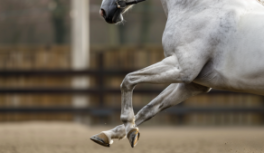
In the canter, the horse moves with one side leading the stride. That leading side is called the lead. The leading front leg reaches farther forward and helps the horse stay balanced through turns and curved lines.
- Right lead: the right front leg leads.
- Left lead: the left front leg leads.
In simple terms, a horse turning right will usually be more balanced and comfortable on the right lead. A horse turning left will usually feel better on the left lead.
When the horse is on the correct lead, the turn feels smoother and more natural. When the horse is on the wrong lead, the canter often feels heavy, crooked, rushed, or difficult to steer.
Correct Lead: What It Is and How to Recognize It
A correct lead means the horse is cantering on the lead that matches the direction, turn, exercise, or line you asked for.
For most basic work, that means right lead for a right turn and left lead for a left turn.
Signs of a Correct Lead
You are likely on the correct lead when:
- the turn feels easier and more balanced;
- the horse seems to “fit” into the curve;
- the horse’s body feels straighter, more connected, and easier to keep on the line;
- the contact feels steadier without you needing to hold the horse together;
- the horse feels more confident and less rushed.
A correct lead should feel organized, not forced.
How to Identify the Canter Lead
You can learn to identify the lead in two useful ways.
From the Ground
Watch the front legs. The leading front leg is the one that reaches farther forward in the canter stride.
From the Saddle
Feel the canter through the turn. On the correct lead, the horse usually feels more balanced and easier to guide through the curve. On the wrong lead, the turn may feel stiff, awkward, or like the horse is drifting away from the line.
Golden rule: in the beginning, you do not need to identify the lead perfectly every time. You need to start noticing the difference between “this feels balanced” and “something feels off.”
Wrong Lead: What It Is and Why It Happens
A wrong lead happens when the horse picks up the opposite lead from the one that fits the line or turn.
Example: you are turning right, but the horse picks up the left lead.
This is different from a deliberate counter-canter, which is a planned training exercise. Here, we are talking about an unintentional wrong lead.
Why Horses Pick Up the Wrong Lead
The most common reasons include:
- loss of balance, especially through a turn or out of a corner;
- lack of strength to hold the correct lead;
- unclear rider aids, with the leg, hand, seat, and direction asking for different things;
- rushing or tension, when the horse picks up the canter in whatever way feels easiest;
- stiffness on one side, making one lead easier than the other.
How to Tell Your Horse Is on the Wrong Lead
You may be on the wrong lead if:
- the horse feels like he is leaning or drifting out through the turn;
- you feel you have to hold too much with your hand;
- the steering feels imprecise;
- the shoulders seem to leave the line;
- the canter feels less comfortable and more effortful.
A wrong lead often feels like the horse is cantering, but the canter is not helping the line you are riding.
Cross-Canter: When the Front End and Hindquarters Are on Different Leads
A cross-canter, also called a disunited canter, happens when the horse is on one lead in front and the opposite lead behind.
A classic example: the horse is on the right lead in front but the left lead behind.
This usually feels noticeably uneven. Many riders describe it as crooked, broken, or as if the front and hindquarters are no longer working together.
Why Cross-Cantering Happens
A horse may cross-canter because of:
- lack of balance, especially in young or developing horses;
- fatigue, when the horse starts well but loses coordination;
- turns that are too tight for the horse’s current strength and training;
- rushing, which causes the horse to lose organization;
- discomfort, including issues related to the back, saddle fit, hooves, or overall soundness.
If cross-cantering becomes frequent, especially more on one side than the other, it is worth looking beyond training and checking the horse’s comfort.
How to Recognize a Cross-Canter
Common signs include:
- a clear crooked or disconnected feeling;
- difficulty staying on the line;
- an odd shift in balance;
- a canter that feels uneven or unsettled;
- an irregular rhythm that does not feel smooth underneath you.
A cross-canter is not something to push through. It is usually a sign that the horse needs to be reorganized.
The Most Important Rule: Do Not Fix It by Pulling
When something goes wrong in the canter, the natural reaction is often to pull. But pulling usually makes the problem worse.
Too much hand can:
- brace the horse’s back;
- reduce impulsion from behind;
- increase loss of balance;
- make the horse more likely to rush, resist, or cross-canter.
A cleaner correction usually follows three steps:
- Rebalance with your posture, seat, and a quiet half-halt.
- Simplify by coming back to trot or walk if needed.
- Ask again with clearer aids and a better line.
The goal is not to trap the horse in the canter. The goal is to set the horse up to canter correctly.
How to Fix a Wrong Lead Without a Fight
1. Come Back to Trot and Ask Again
If the horse picks up the wrong lead, the cleanest correction is often the simplest one.
Come back to trot, rebalance for a few seconds, prepare the turn or corner, and ask again.
The longer you continue on the wrong lead unintentionally, the more the horse may learn that the lead does not matter.
2. Use the Corner as a Teacher
Corners and turns can help the horse understand which lead makes sense.
Try this:
- establish an organized trot before the corner;
- ride the corner with clear direction;
- use a half-halt to rebalance;
- ask for canter as you come out of the corner.
Because the horse’s body is already shaped for the direction, the correct lead becomes easier to understand.
3. Check Your Own Position
Sometimes the rider accidentally asks for the wrong lead without realizing it.
Common rider mistakes include:
- looking one way while the shoulders collapse the other way;
- pulling too much on the inside rein;
- losing the outside leg;
- bracing the hips;
- leaning instead of guiding.
Think of your body as part of the line. Look where you are going, keep your outside leg clear, and let your seat follow the canter once the horse steps into it.
How to Fix a Cross-Canter Safely and Clearly
1. Do Not Try to Save It Inside the Chaos
When the horse cross-canters, the best answer is usually not to keep going and hope it improves.
Come back to trot calmly. Straighten or move onto a large circle. Breathe. Reorganize the rhythm. Then ask again when the horse is balanced.
2. Make the Job Easier
Cross-cantering often appears when the task is too difficult for the horse’s current strength or balance.
Set the horse up for success:
- ride a large circle, ideally about 66 feet across;
- ride short canter sets;
- aim for 8 to 12 good strides;
- come back to trot before the canter falls apart.
Quality matters more than duration.
3. Use Transitions to Build Strength Behind
A useful strengthening exercise is:
canter → bring the canter almost back to trot for 2 or 3 strides → canter again
This teaches the horse to rebalance, carry more weight behind, and return to the canter without rushing.
Keep the repetitions short. Stop before fatigue causes the horse to lose balance or coordination.
4. Do Not Ignore a Pattern
If cross-cantering becomes routine, especially on one lead, check the basics:
- conditioning;
- back comfort;
- saddle fit;
- hoof balance;
- dental comfort;
- overall soundness.
This is not about panicking. It is about being fair. A horse that is uncomfortable will struggle to offer a balanced, connected canter.
How to Keep the Correct Lead From Falling Apart
Even when the horse picks up the correct lead, the canter can still lose balance later. The key is to keep the gait organized without making it tight or trapped.
1. Rhythm First, Then Forward
Focus on cadence before asking for more ground cover.
If the horse starts to rush:
- use a short half-halt;
- soften;
- return to the rhythm.
The horse needs to understand that cantering does not mean running.
2. Choose Simple Lines
In early canter work, keep the exercises easy enough for the horse to stay balanced.
Use:
- long straight lines;
- large, open turns;
- short transitions;
- simple patterns.
Small circles, tight turns, and complex exercises too early can invite wrong leads and cross-cantering.
3. Work Both Sides Without Overdrilling the Harder Side
Every horse has an easier side. The goal is not to punish the difficult side. The goal is to build it.
Keep the good side calm, balanced, and confident. Work the harder side with less demand, more patience, and consistent repetition.
Small improvements count.
Simple Exercises to Improve the Canter Lead and Quality
Exercise 1: Corner and Canter Depart
Goal: improve the chance of picking up the correct lead.
- Ride an organized trot.
- Prepare a clear corner.
- Use a quiet half-halt.
- Ask for canter as you leave the corner.
Exercise 2: Large Circle With a Clean Exit
Goal: maintain rhythm and prevent rushing.
- Pick up the canter.
- Ride a large circle, ideally about 66 feet across.
- Canter for 8 to 12 quality strides.
- Return to trot before the balance deteriorates.
Exercise 3: Rebalancing Transitions Within the Canter
Goal: build strength and organization.
- Canter.
- Bring the canter almost back to trot for 2 or 3 strides.
- Ask for canter again.
Use only a few repetitions, and stop before fatigue affects the horse’s balance or coordination.
Exercise 4: Better Trot, Better Canter
Goal: improve the quality of the canter depart.
Before asking for canter, improve the trot:
- ride walk-trot transitions;
- establish a steady trot rhythm;
- keep the direction clear;
- ask for canter only when the trot feels organized.
A better canter often starts before the canter ever begins.
A Better Canter Starts With Knowing What You Feel
Learning to recognize the correct lead, the wrong lead, and the cross-canter gives you a clearer way to understand what is happening underneath you.
Instead of fighting symptoms—rushing, heaviness, crookedness, or loss of steering—you can address the cause: balance, clear aids, progressive strength, and physical comfort.
When you ride that way, the canter changes. It stops feeling like a guessing game and becomes something you and your horse can build together: clearer, straighter, and more balanced with every stride.