Owning a Friesian is different from owning any other horse — not only because of the presence and the cost, but because of the Friesian horse care requirements that are specific to the breed and that, if neglected, compromise both the animal’s health and the spectacular appearance that makes it so unique. The mane, the black coat, the leg feathering, and the Friesian’s general bearing demand a care protocol that goes beyond what most breeds require.
The good news: once the routine is established, Friesian management becomes natural — and the result of a well-maintained animal is as visually rewarding as it is functionally sound.
Mane and Tail Care
The Friesian’s mane and tail are breed characteristics and must never be trimmed or permanently braided. The KFPS standard establishes that these elements must be preserved naturally — and serious breeders do not compromise on this principle.
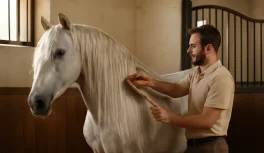
Regular conditioning: long, dense manes tangle easily. Using horse-specific mane conditioners — applied after each bath and periodically between baths — is essential for maintaining the silky texture and preventing knots. Silicone-free products are preferable: silicone makes individual hairs slide, but it also makes separating tangled strands more difficult.
Crest cover: a lightweight sheet covering the neck and protecting the mane is highly recommended for Friesians kept in pasture or paddock. Fence wire, branches, and friction with other horses can break and split strands that took years to grow.
Detangling technique: never use a fine-toothed comb on a Friesian mane. The correct method is to detangle with fingers — working from the bottom up, in sections, with conditioner applied. For tightly closed knots, concentrated conditioner and patience are the only appropriate tools.
Washing frequency: the Friesian’s mane does not need to be washed as often as the body. Excessive washing can dry the strands and make them brittle. A complete mane wash every two to four weeks is adequate in most cases, with light hydration applied between washes.
Black Coat Care
The Friesian’s black coat is its calling card — and it is also the most challenging aspect of the breed’s visual management.
Daily brushing: regular brushing removes dust, dried sweat, and residue that dull the coat. Use a soft-bristle brush for the final finish — the stiff brush removes heavy dirt, while fine bristles create the shine.
Sun protection: UV radiation is the black coat’s primary enemy. In very sunny environments, using fly sheets with UV protection (UPF 50+) during peak sunlight hours significantly reduces fading. In tropical climates, this measure is essential for maintaining the deep black coat.
Supplementation: adequate melanin synthesis — the pigment that produces the black color — depends on amino acids (especially tyrosine and phenylalanine) and minerals (copper, zinc). A quality base ration covers most requirements, but Friesians prone to fading often benefit from specific supplementation. Consult a veterinarian or equine nutritionist before starting any supplement.
Specialty shampoo: shampoos formulated for dark coats contain agents that intensify color and remove the reddish tones caused by sun and oxidation. Used periodically, they make a perceptible difference in the coat’s visual result.
Night sheet: in cooler periods, a night sheet not only maintains body warmth but also protects the coat from stable dust and bedding residue, reducing the frequency of necessary baths.
Feathering Care
The leg feathering — the long, silky hair covering the hooves and lower legs — is one of the Friesian’s most striking visual elements, but also the area requiring specific attention to prevent health issues.
Scratches (mud fever): the most common disease associated with feathering. It is a bacterial infection (typically Dermatophilus congolensis or staphylococci) that develops in the moist skin beneath the dense leg hair. Symptoms include crusting, scaling, redness, and tenderness at the fetlock and pastern regions.
Prevention: keep the legs dry after exercise in wet footing, wash and thoroughly dry the feathering after baths, and regularly inspect the skin beneath the hair. In very rainy periods, consider temporary partial trimming of the feathering to facilitate drying — a practical decision that feathering enthusiasts resist making but which may be necessary in recurring cases.
Treatment: when scratches develop, treatment typically involves careful removal of crusts, application of antiseptics, and in more severe cases, antibiotic therapy prescribed by a veterinarian. Do not ignore the first signs — the infection progresses quickly if untreated.
Regular inspection: a weekly inspection of the feathering — checking the skin beneath the hair, hoof and frog condition, and any areas of heat or swelling — allows problems to be identified early, when they are easiest to address.
General Health: What the Breed Predisposes
The Friesian has certain genetic health predispositions that every owner should know.
Megaesophagus: the Friesian has a higher-than-average incidence of megaesophagus — a condition in which the esophagus loses its ability to contract properly, making swallowing difficult. Signs include frequent choke episodes, nasal discharge during or after feeding, and unexplained weight loss. Diagnosis is made by endoscopy. There is no cure, but appropriate dietary management allows reasonable quality of life.
Aortic fragility: studies document an increased incidence of spontaneous aortic rupture in Friesians — a rare but fatal condition. The exact mechanism is still being studied, but there is genetic evidence of breed predisposition. Stallions engaged in intense physical activity are most commonly affected.
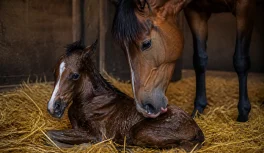
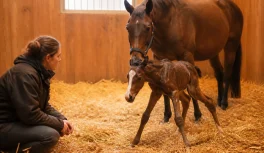
Retained placenta in mares: Friesian mares have a significantly higher incidence of post-foaling placental retention compared to the general equine average. It is a veterinary emergency requiring immediate intervention. Properties breeding Friesian mares should have established monitoring protocols for the post-foaling period.
Lymphatic conditions: the feathering is associated with a more developed cutaneous lymphatic system in the extremities, which predisposes some Friesians to chronic leg edema — particularly in older or sedentary animals. Regular exercise and feathering management are the primary preventive measures.
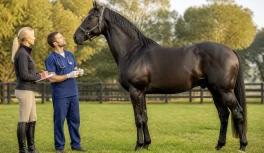
Knowing these predispositions is not cause for alarm — it is part of the informed care that a responsible owner should have. A veterinarian familiar with the breed is an essential partner for anyone who decides to own a Friesian.