Owning a large horse is a commitment that demands real preparation — and Shire horse care goes well beyond what most first-time owners expect. The breed’s monumental build demands appropriate infrastructure, carefully planned nutrition, and special attention to parts of the horse’s body that rarely cause problems in lighter breeds. This guide covers the essentials for anyone looking to own, acquire, or simply understand what a Shire needs to live healthy and well.
What a Shire Eats Each Day: Volumes That Make You Think
The first surprise in Shire horse care is the feed bill. An adult Shire consumes between 33 and 44 pounds (15–20 kg) of hay per day — more than double the daily forage intake of an average-sized sport horse. During periods of heavy work or cold weather, that number can climb to 48 pounds (22 kg) or more.
The foundation of the diet should be quality hay — grass or a grass-legume mix. Pasture supplements the diet when available, but must be monitored: high-sugar grasses during active growth periods (spring, after heavy rain) increase the risk of laminitis in heavy horses. Grain concentrates are fed according to the horse’s level of work.
What Is the Ideal Feeding Schedule for a Horse This Large?
The core principle: high forage volume, moderate grain, controlled pasture access. The equine digestive system functions best with frequent, small-quantity feedings. Dividing hay into at least three portions per day is the standard recommendation — horses that go many hours without feed develop stable vices and are at elevated risk for gastric issues.
Feathering: The Biggest Management Challenge in Shire Care
The featherings — the flowing leg hair that covers the hooves — are beautiful, essential to the breed standard, and represent the grooming aspect that surprises first-time Shire owners most. The primary risk is mud fever — a bacterial skin infection that establishes itself under the feathering when the skin remains wet for extended periods.
Symptoms include redness, scaling, hardened crusting, and in severe cases, swelling and lameness. In Shires, the density of the feathering creates ideal conditions for bacterial growth if management is neglected — particularly in wet climates or during rainy seasons.
Step-by-Step: Cleaning Feathering Without Damaging the Skin
The recommended routine after any outing on wet ground:
1. Wash the lower legs with warm water using a sponge or a low-pressure hose 2. Apply a mild shampoo and scrub gently against the direction of hair growth 3. Rinse completely — shampoo residue irritates the skin 4. Towel dry, then finish with an air blower on low heat 5. Comb downward with a wide-toothed comb 6. Inspect the skin beneath the feathering weekly for redness, odor, or crusting
During especially wet periods, a thin layer of petroleum jelly applied to the skin beneath the feathering helps reduce moisture penetration.
Shoeing: A Critical Point in Hoof Health
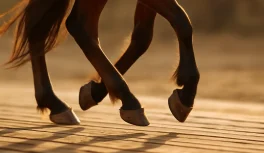
A Shire should be shod every six to eight weeks — the same interval as other breeds, but with very different implications given the animal’s size. Shire hooves are significantly larger than those of medium-weight breeds: a Shire shoe can have the diameter of a dinner plate. Farriers without experience in heavy breeds often lack the right tools and the physical conditioning the work demands.
How to Protect Large Hooves Over Years of Work
Beyond conventional steel shoes, many breeders opt for rubber or polyurethane shoes for horses that work on hard surfaces — asphalt, gravel, concrete flooring. These materials absorb impact and reduce cumulative joint wear. Stall flooring also matters: rubber matting or deep bedding protects the joints better than bare concrete.
Space and Exercise: What a Shire Actually Needs
The Shire does not adapt well to confined spaces — it needs constant movement to maintain healthy joints, circulation, and mental balance. In large animals, a sedentary lifestyle directly contributes to laminitis, limb edema, and stereotypic behaviors.
The minimum recommendation is four hours of free pasture time per day, supplemented by directed exercise at least three times per week. For stalling, Shire care requires a minimum stall size of 13 by 13 feet (4 × 4 m) for adults — though experienced breeders prefer 15 by 15 feet (4.5 × 4.5 m) or larger. Ceiling height should be at least 11.5 feet (3.5 m).
What Type of Exercise Is Best Suited for a Heavy Draft Breed?
Shires in active draft work receive adequate exercise through that activity alone. For show horses or breeding animals without regular work, exercise must be planned: in-hand work, longeing, or light driving are all appropriate options. Mental health matters too — horses isolated for long periods develop stable vices and lose the breed’s characteristic sociability.
Which Conditions Are Most Common — and How to Prevent Them?
The Shire is generally a robust breed with good longevity — between 20 and 25 years with good care. But its size creates specific vulnerabilities that every owner should understand:
Laminitis is the primary concern in heavy horses. The combination of high body weight and a diet rich in soluble carbohydrates can inflame the sensitive laminae inside the hoof, causing intense pain and, in severe cases, rotation of the coffin bone.
Mud fever is the feathering-specific risk: bacterial dermatitis that establishes under wet leg hair, especially during rainy periods.
Cushing’s disease (Pituitary Pars Intermedia Dysfunction, PPID) affects horses over 15 more commonly and requires veterinary diagnosis and ongoing medication.
How to Build an Effective Preventive Protocol for the Shire
Three pillars: balanced diet (quality hay, monitored pasture), feathering management (regular cleaning, weekly skin inspection), and semi-annual veterinary exams — even when the horse appears healthy. Annual vaccinations and parasite control every six to eight weeks complete the basic protocol. Regular veterinary checkups allow early detection of laminitis signs, dental issues, and hormonal changes before they become emergencies.