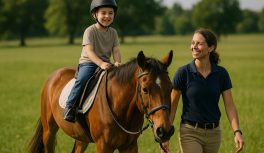
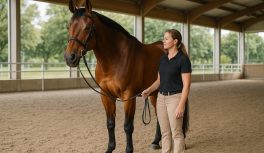
There is something in the act of being near a horse that gently but effectively disrupts the mental patterns that feed anxiety and depression. It is not mysticism — it is neurobiology, somatic psychology, and the profound capacity these animals have to pull people back into the present moment when the mind insists on getting stuck in the past or catastrophizing the future.
Equine therapy for anxiety and depression is one of the fastest-growing areas within horse-assisted intervention, driven by research with combat veterans, college students, trauma survivors, and the general population. What the science is uncovering confirms what many people have long sensed: time with horses does something good.
Why Horses Help with Mental Health Conditions
Horses are prey animals — they evolved over millions of years needing to detect threats in their environment and respond with speed. That evolutionary history gave them a distinctive capability: they read the emotional state and body language of the people around them with a precision that no human can consciously replicate.
When you are anxious, the horse perceives it — in the tension of your muscles, the irregularity of your breathing, the rigidity of your posture. And it responds: becoming more alert, more tense, more reactive. When you calm down, the horse settles. This living, immediate biofeedback is one of the most powerful therapeutic tools that equine therapy offers for mental health.
For anxiety: the need to regulate your own emotional state so as not to startle the horse creates a concrete external incentive for the work of self-regulation — something many therapeutic approaches ask for as an abstract exercise. With the horse, regulation has immediate, visible consequences.
For depression: horses demand presence. You cannot be with a horse and simultaneously be completely lost inside your own head. The animal’s size, its breathing, its movements — everything pulls attention into the here and now. For people with depression who spend hours ruminating on the past, this anchor in the present has real therapeutic value.
What the Research Shows
Veterans with PTSD
Some of the most robust studies on equine therapy and mental health have involved combat veterans with Post-Traumatic Stress Disorder. A study published in the Journal of Traumatic Stress in 2015 documented significant reductions in PTSD symptoms — including hypervigilance, avoidance, and re-experiencing — following an eight-week equine therapy program, with results comparable to pharmacological interventions and without the associated side effects.
Subsequent studies have replicated similar findings, and today several military programs in the United States, Canada, and Europe include equine therapy as a treatment component for veterans.
Anxiety in Adults and Adolescents
Studies using validated anxiety scales — including the GAD-7 and the Beck Anxiety Inventory — document score reductions following equine therapy programs in adults with generalized anxiety disorder and in adolescents with social anxiety. The proposed mechanisms include reduced cortisol (the stress hormone), increased oxytocin (the bonding hormone), and activation of the parasympathetic nervous system.
Depression
Research with people experiencing mild to moderate depression shows improvements in mood, energy, and motivation following regular participation in horse-related activities — both riding and ground work. The caregiving element appears to play an important role: the responsibility of caring for a living being who depends on you provides purpose and structure — two elements frequently disrupted by depression.
Youth in Vulnerable Situations
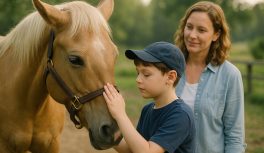
Equine therapy programs for adolescents with histories of trauma, abuse, or neglect show improvements in self-esteem, emotional regulation, and social skills. The horse, as a nonjudgmental partner, creates a safe relational space for people who carry deep distrust of human relationships.
How Equine Therapy for Mental Health Works
Equine therapy for anxiety and depression often uses approaches that differ from modalities more focused on physical rehabilitation.
Equine-Assisted Activities (Ground Work)
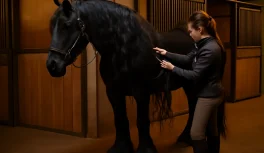
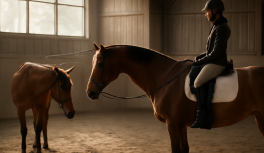
Many mental health approaches involve no riding at all — the work happens on the ground, in direct interaction with the horse. Leading with a halter, setting up tasks that ask the horse to respond to nonverbal commands, observing the animal’s behavior and reflecting on what it mirrors back — all of this generates rich material for the therapeutic process.
Working with a Mental Health Professional
Equine therapy for mental health is most effective when delivered in co-facilitation: an equine specialist (who understands horse behavior) and a mental health therapist (psychologist, psychotherapist, licensed clinical social worker) work together. The horse generates experiences; the therapist helps the patient process what those experiences mean.
Mindfulness and Presence
Many sessions incorporate elements of mindfulness — being fully present with the horse, noticing its breathing, feeling the warmth of its coat, listening to the sounds of the environment. For people with chronic anxiety, this practice of presence accumulates into meaningful effect over time.
Equine Therapy as Complement, Not Replacement
This needs to be said clearly: equine therapy for anxiety and depression functions as a complement to other therapeutic approaches — psychotherapy, medication when indicated, lifestyle changes. It does not replace psychiatric treatment in moderate to severe cases.
For mild to moderate anxiety and depression, it can serve as a primary intervention or as meaningful support. For more severe presentations, it is one component within a broader therapeutic plan.
Integration with the mental health professional already treating the patient is strongly recommended — ideally with regular communication between the equine therapy provider and the primary treating clinician.
The Effect of Nature and Movement
Part of the benefit of equine therapy for mental health does not come exclusively from the horse — it comes from the environment where it takes place. Equine therapy centers are located in rural or semi-rural settings, with green space, fresh air, and distance from the urban environments that fuel so much contemporary anxiety.
Research on nature therapy — sometimes called ecotherapy — documents independent benefits of contact with natural environments for anxiety and depression, benefits that stack on top of those specific to working with horses.
The physical movement involved in riding also matters: moderate physical activity releases endorphins and serotonin, with documented antidepressant and anxiolytic effects. Even patients who are simply carried by the horse’s movement benefit from this dimension.
Who Is Most Likely to Benefit
Equine therapy is particularly well suited as a mental health approach for people who:
- Struggle to engage with conventional talk therapy
- Have trauma histories and difficulty trusting human relationships
- Respond well to somatic (body-based) approaches
- Have a connection to nature and animals
- Are seeking complementary interventions alongside conventional therapies
It is not for everyone — and it doesn’t need to be. But for those who resonate with horses, equine therapy can open therapeutic doors that other paths haven’t been able to reach.
When the field heals, it is because something in the encounter between human and horse accesses a wisdom older than any therapeutic technique — and sometimes that is exactly what a suffering mind needs to find.