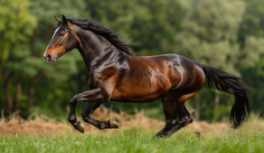
Some horses run fast. Others jump clean. And then there are the ones that don’t just win — they rewrite the definition of what winning looks like. The most famous horses in equestrian sports history aren’t simply great athletes. They’re cultural landmarks: animals whose stories crossed the fences of arenas and racetracks and entered the broader human imagination.
From the dirt of Belmont Park to the sand of a Grand Prix dressage arena in Aachen, these legends set benchmarks that still stand — and they did it in ways that made people who had never sat on a horse care deeply about the outcome.
What Actually Makes an Equine Legend?
Not every champion becomes a legend. The sport produces champions every year — horses that dominate a season, collect titles, and then retire into obscurity while the next generation takes over. Legends are different.
Three elements appear consistently in the famous horses whose stories have survived decades:
Objectively incomparable achievements — records that hold for decades, titles won under circumstances no other animal has replicated, performances that defy the statistical baseline of what’s expected.
A compelling human story alongside the horse — the rider who understood what others dismissed, the trainer who rescued the animal from an ordinary fate, the owner who believed when the evidence was thin. Equestrian legends are almost never solitary; they exist inside a relationship.
Cultural reach beyond the sport — horses that show up in books, documentaries, postage stamps, stadium names, and the casual vocabulary of people who don’t follow equestrian sports. Animals that became symbols of something larger than competition.
On the Racetrack: Speed That Defies Explanation
Horse racing is the oldest equestrian sport and the one that has produced the most legends. From Victorian England to the American tracks of the twentieth century, the famous horses of the turf have left marks that science still struggles to fully explain.
Secretariat is the most analyzed case in equine athleticism. In June 1973, at the Belmont Stakes in New York, he covered a mile and a half in 2:24 — a record that has stood for more than fifty years. The margin of victory was 31 lengths. After his death, veterinarians found a heart estimated at nearly 22 pounds — roughly three times the normal size for the species. Secretariat didn’t just win races: he established a new reference point for what a Thoroughbred can physically be.
Man O’War, in the 1910s and 1920s, was the precursor to that American tradition. In 21 starts, he won 20 — and the single loss came under disputed circumstances. He spent most of his life as a stallion and produced descendants who dominated the turf for decades.
Winx, the Australian mare retired in 2019, represents the most recent chapter in that story. Thirty-three consecutive wins, four consecutive Cox Plates, four years without a defeat. In a sport still dominated by males, she became the most decorated racehorse of the modern era and was named the world’s best racehorse four years running.
What Separates Track Champions from Turf Legends?
Champions win races. Legends win races in a way no one has seen before — and change what breeders, trainers, and the betting public believe is possible. Secretariat, Man O’War, and Winx share the quality of not just winning, but winning in ways that appeared to exceed known physiological limits.
In the Jumping Ring: Height, Courage, and the Invisible Partnership
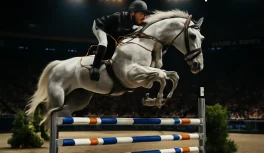
Show jumping produces a different kind of legend. Here, horse and rider are inseparable — and what makes a horse famous in the discipline is often the quality of the specific relationship it builds with one human.
Big Ben, the 17.3-hand Belgian warmblood purchased on the European market by Canadian rider Ian Millar, became the most beloved horse in Canadian equestrian history. Two consecutive World Cup titles (1988 and 1989), more than 40 international Grand Prix victories, and a competitive career that stretched to age 17. Big Ben jumped with a technical cleanliness that coaches still use as a reference point decades later.
Snowman tells one of the most improbable stories in equestrian sport. Purchased for $80 at a Pennsylvania kill auction, the former plow horse was rescued by Dutch immigrant Harry de Leyer in 1956. Two years later, Snowman won the National Horse Show at Madison Square Garden — and then won it again the following year. The American press called him “the Cinderella Horse.” The story still circulates in riding clubs around the world more than sixty years later.
Milton, who jumped as though the fence was more of a suggestion than an obstacle, dominated the European circuit in the 1980s with John Whitaker and became the first show jumping horse to earn more than one million British pounds in prize money.
In the Dressage Arena: Elegance as Elite Sport
Dressage is the discipline where the horse comes closest to a moving work of art. And no horse expressed that with more impact than Totilas.
The black KWPN stallion born in 2000, ridden by Dutch rider Edward Gal, did what had seemed impossible: he made dressage go viral. His Grand Prix Special tests broke the 90% scoring barrier — something judges had considered unreachable. At the 2010 World Equestrian Games in Lexington, Kentucky, he won three individual gold medals and redefined what the sport’s evaluation criteria should recognize.
Valegro, Charlotte Dujardin’s partner, wrote the next chapter. World records in every Grand Prix test, Olympic gold at London 2012 and Rio 2016, and a sequence of scores that commentators compared more to a musical performance than to a sports competition. Retired in 2016 still at the peak of his competitive form, Valegro holds the most scores above 90% in the sport’s history.
Why Does Dressage Produce Such Different Legends Than Racing?
In racing, the legend is built in minutes — the time it takes for a race no one forgets. In dressage, it’s built over years of visible progression, increasingly refined movement, a physical language between horse and rider that the audience learns to read and love. Dressage legends age more slowly — and they last longer.
In the Steeplechase: Courage Beyond the Fences
The Grand National at Aintree, England, is widely considered the most demanding horse race in the world. Forty-two obstacles across more than four miles — including the notorious Becher’s Brook and The Chair. Few horses complete the race once. Red Rum won it three times.
In 1973, 1974, and 1977, Red Rum crossed the Aintree finish line first — a sequence without equal in over 170 years of the race’s history. Between those victories, he finished second in 1975 and 1976. Trained by backyard trainer Ginger McCain on a beach in Southport, England, Red Rum became a British national symbol. When he died in 1995, he was buried at the Aintree finish line itself.
What famous horses teach us about what’s possible
Every equestrian legend carries the same core message: the limits we believed in were smaller than reality. Secretariat ran faster than any biomechanical model predicted. Totilas moved with a precision that judges thought impossible to score at the maximum. Snowman cleared obstacles that no former plow horse should have been able to approach.
The famous horses of sport are not legends despite their physical limits — they’re legends because they transcended them. And that transcendence only happens inside a relationship: with a trainer who saw what others ignored, a rider who learned the specific language of that individual animal, and a context that allowed something rare to fully emerge.