Starting your equestrian journey with a Quarter Horse is one of the most common choices — and, in most cases, one of the most sensible ones — for people just beginning to ride. The breed has a reputation for being balanced, intelligent, and responsive, which sounds ideal for a beginner. But the story does not end there. There are Quarter Horses that are ideal companions for someone learning, and there are Quarter Horses that will challenge an experienced rider.
Knowing how to tell those two profiles apart is what will determine whether your early equestrian experience is transformative — or traumatic.
Is the Quarter Horse Really Good for Beginners?
Generally speaking, yes. But with one important caveat: the breed is versatile, and within it there are very different profiles.
The balanced temperament for which the Quarter Horse is recognized is a breed-wide trait — but how that temperament is expressed varies considerably depending on:
- Bloodline: animals from lines bred for racing and high-performance sport tend to be more reactive, with more “engine” and less patience for insecure riders
- Use history: a horse accustomed to high-level competition will behave differently during a quiet weekend with a beginner
- Training received: a poorly trained horse, regardless of breed, can be difficult at any level
- Age: older horses with more experience tend to be more tolerant and predictable
For a beginner, the ideal profile within the breed is a Quarter Horse with a general-use or working bloodline, between 5 and 12 years old, a varied use history (ranch, trail, leisure), and a solid foundation of training.
What Traits Indicate a Good Quarter Horse for a Beginner?
When evaluating an animal, pay attention to:
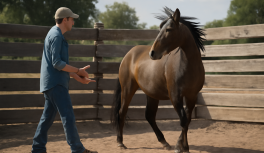
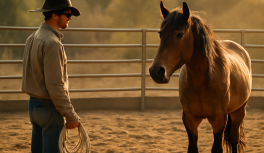
Response to touch and handling on the ground A horse that accepts handling calmly — standing still for shoeing, vaccination, dental work — will generally behave well under saddle too. Avoid animals that become agitated at common daily management tasks.
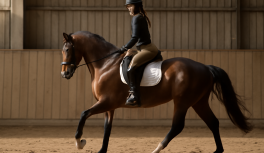
Behavior under saddle Ask to ride the horse before any decision. Observe:
- Does it stand quietly to be mounted?
- Does it respond to rein contact without resistance?
- Does it maintain a steady pace without constant correction?
- Does it react calmly to unexpected sounds and objects?
Documented history Whenever possible, ask for background on the animal: where it was bred, what it was used for, whether it has had health or behavioral problems. Be cautious with sellers who cannot answer these questions.
Veterinary pre-purchase examination Never buy a horse without a pre-purchase exam from a qualified equine veterinarian. The vet evaluates health, physical structure, limbs, and can identify problems that a non-expert would not notice.
Which Quarter Horse Bloodlines Should Beginners Avoid?
Some Quarter Horse bloodlines are recognized as being “hotter” — more reactive, higher energy, and more technically demanding of the rider. For a beginner, these are not the best choices:
- High-Speed-Index racing lines: very fast and reactive animals, trained to explode from the gate, are not the right profile for someone still learning
- Elite cutting horses: animals that compete at the top level of cutting have extremely rapid responses to cattle and rider — requiring a precision that a beginner has not yet developed
This does not mean these bloodlines are bad. They are excellent — in the right hands.
Is an Older Quarter Horse Better for a Beginner?
Generally, yes — with some precautions. A Quarter Horse between 8 and 12 years old, well trained, offers clear advantages:
- Already “seen the world”: does not spook at everyday situations
- Has consolidated training: commands are clear in muscle memory
- Is more patient with rider errors
The concern with older horses is the health of their limbs and joints — which is exactly why the pre-purchase exam matters. A healthy 10-year-old horse may still have many years of light, enjoyable use ahead.
How Much Does a Good Quarter Horse for a Beginner Cost?
The Quarter Horse market in Brazil is broad and prices vary widely. As a general reference:
- Unregistered animals with no sport history: moderate price range; requires more careful evaluation, as quality is not guaranteed
- Registered animals with light-use history: mid-range; better traceability, still accessible
- Animals with pedigree and sport history: higher range, with no defined ceiling
For a beginner, the middle range typically offers the best value — an animal with documented background, known temperament, and without the physical demands of a competition athlete.
The First Horse Defines the Experience
Choosing the first horse is one of the most important decisions a beginning rider will make. A horse that is not matched to the rider’s level generates insecurity, accidents, and often causes people to abandon the activity before it has really begun.
A Quarter Horse with the right profile — balanced, experienced, and well trained — can be the beginning of a partnership that lasts decades. And in the world of horses, few things carry more value than a first horse that teaches, protects, and builds confidence rather than dismantling it.
If you are in doubt, the best decision is always the same: before buying, seek guidance from a trusted professional. An experienced instructor or a veterinarian with equine expertise can make the difference between a sound choice and an expensive lesson.