The equine supplement market has expanded enormously in recent decades. Today, owners and breeders can find products for virtually everything: joints, coat, hooves, performance, immunity, digestion, reproduction, behavior. The range is vast — and so is the confusion. Knowing how to distinguish necessary supplementation from sophisticated marketing is a skill that can save money, prevent management errors, and above all protect the health of the animal.
When Supplementation Is Necessary — and When It Isn’t
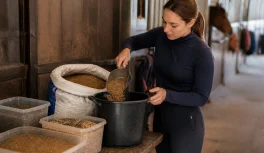
The first question to ask before any supplementation is: what does the base diet already provide? A horse with access to quality pasture year-round, good-quality hay, and a commercial concentrate appropriate for its category likely already receives all the micronutrients it needs. Supplementing on top of that may simply overload the liver and kidneys with excess nutrients — and in some cases create imbalances.
Situations where supplementation has solid scientific backing include:
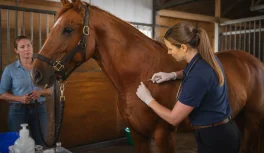
Diagnosed deficiency — the safest way to indicate supplementation is through blood work showing specific deficiencies. Low selenium, vitamin E deficiency, anemia from iron or copper deficiency, hypocalcemia — all can be addressed with targeted supplementation.
Known gaps in the diet — if the available hay is of low nutritional value (late-cut, poorly stored) and the concentrate is basic, there may be gaps in vitamins, minerals, or protein that justify supplementation.
High-demand life stages — rapidly growing foals, mares in the last trimester of pregnancy and during lactation, and high-performance horses have requirements that, in some circumstances, exceed what the base diet offers.
Specific health conditions — certain health problems respond well to targeted supplementation: horses with osteoarthritis and glucosamine-chondroitin supplementation, horses with hoof problems and biotin, horses with a history of myopathy (tying-up) and vitamin E combined with selenium.
Vitamins and Minerals That Really Matter
Vitamin E
Vitamin E (alpha-tocopherol) is the most important fat-soluble antioxidant for horses. It protects cell membranes from oxidative damage — a process that increases significantly with intense exercise. Fresh, quality pasture is an excellent source; dry hay loses up to 80% of its vitamin E during the drying and storage process.
When to supplement: horses in full stabling on hay-based diets, horses undergoing high-intensity training, horses showing signs of nutritional myopathy (muscle weakness, stiffness, dark urine after exercise), foals with vitamin E deficit.
Natural vitamin E (d-alpha-tocopherol) has significantly higher bioavailability than synthetic vitamin E (dl-alpha-tocopherol). Quality products specify the form and dose in IU (International Units).
Selenium
Selenium and vitamin E work together in cellular protection. Severe deficiencies cause white muscle disease (nutritional muscular dystrophy), particularly in foals. Selenium toxicity from excess is equally serious — the therapeutic index is narrow.
Important: regions with naturally selenium-deficient soils (common in various countries) tend to produce forages with low mineral content. Regions with selenium-rich (seleniferous) soil can cause toxicity. Before supplementing selenium, it is essential to know the animal’s baseline level through a blood test.
Vitamin A
Essential for vision, immunity, and reproduction. Horses with access to fresh pasture rarely show deficiency — the beta-carotene in green grass is converted to vitamin A by the body. In full stabling on dry hay without pasture, supplementation may be indicated, particularly for breeding mares.
Zinc, Copper, and Manganese
These three minerals work together in collagen synthesis and connective tissue health — joints, tendons, hooves, and coat. They are also frequently imbalanced in diets based on tropical hays, which tend to be rich in iron but poor in zinc and copper. Excess iron — common in regions with iron-rich soil — actively blocks the absorption of zinc and copper.
Blood analysis is the most reliable method for identifying imbalances in this trio.
Biotin
Biotin (vitamin B7) is the most solidly evidence-based supplement for hoof problems. Controlled studies have demonstrated that biotin supplementation at doses of 15–25 mg/day improves hoof quality in horses with crumbling hooves, weak lamellae, or slow growth.
Patience is essential: hooves grow approximately half an inch per month. The results of biotin supplementation only become visible after 6–12 months of continuous use.
Joint Supplements: Glucosamine, Chondroitin, and Hyaluronic Acid
Equine osteoarthritis is one of the most common problems in competition and senior horses. The trio of glucosamine, chondroitin sulfate, and hyaluronic acid represents the most researched joint supplementation in humans, dogs, and progressively in horses.
What the science says: studies in horses are less numerous and often smaller in scale than those in humans or dogs. But available data suggests:
- Glucosamine and chondroitin may have a modest but real effect on reducing joint inflammation and improving synovial fluid lubrication in horses with mild to moderate osteoarthritis.
- Results are more evident in animals already showing clinical signs than as prevention.
- Oral bioavailability is variable — direct intra-articular injection of hyaluronic acid is significantly more effective than oral supplementation.
Practical conclusion: joint supplements carry low risk and may provide real benefit in horses with established joint problems. As prevention in young, healthy horses, the evidence is weaker.
MSM (Methylsulfonylmethane)
MSM is an organic sulfur source, widely used as a natural anti-inflammatory. Studies in horses are limited, but the product has an excellent safety profile and good acceptance. Many owners report improved mobility and reduced stiffness in older horses or those with a history of injuries. It can be combined with glucosamine and chondroitin.
Probiotics and Prebiotics: Digestive Health
The horse’s gut microbiome — the community of microorganisms inhabiting the colon — plays a central role in fiber digestion, B vitamin synthesis, and immune defense. Stressful situations (transport, competition, diet changes, antibiotic therapy) can disrupt this microbial community.
Probiotics (live microorganisms) and prebiotics (substrates that feed beneficial bacteria) are particularly indicated:
- After prolonged antibiotic treatment
- During periods of intense stress
- In horses with a history of recurrent diarrhea
- During diet transitions
The effectiveness of probiotics in horses is moderately documented. Products with the best evidence use specific strains such as Lactobacillus spp., Saccharomyces cerevisiae (live yeast), and Bacillus spp. in adequate concentrations (CFU — colony-forming units).
Performance Supplements: What Works and What Is Marketing
Electrolytes
Horses in intense work or in hot climates lose sodium, potassium, chloride, calcium, and magnesium through sweat. Electrolyte replacement is the performance supplement with the strongest scientific backing — essential in endurance rides, intense show jumping, and polo. The simplest form is plain salt (sodium chloride) available free-choice — most horses self-regulate intake.
Fat (Vegetable Oils)
Adding 2–6 ounces of canola, rice bran, or linseed oil to the diet is an effective and well-documented strategy to increase caloric density without raising starch levels. Especially useful for horses in high performance that need more energy without the glycemic risk of grains. Adaptation to fat takes 3–4 weeks.
Creatine and Precursors
Creatine is widely used in human athletes. In horses, studies are very limited and results inconsistent. There is no solid evidence in the current scientific literature to justify creatine supplementation in equines based on performance.
How to Evaluate a Supplement Before Buying
Four practical questions:
1. Are there published studies in horses (not only in humans or other animals)? 2. Does the product clearly list active ingredients and doses? 3. Is the manufacturer’s recommended dose sufficient to reach effective levels (compare with doses studied in the literature)? 4. Is the manufacturer transparent about evidence — or does it rely only on testimonials and marketing language?
Supplements from reputable companies fund independent research, list ingredients precisely, and use doses based on studies. Products that promise extraordinary results without evidence should be treated with skepticism.