An adult horse weighing 1,100 pounds at rest consumes between 22 and 26 pounds of dry matter per day — the equivalent of roughly 2% of its body weight. But that same equation shifts dramatically when the horse is in intense training, growing rapidly, in late pregnancy, or recovering from illness. Equine nutrition is not a single formula: it is a science that adjusts continuously to life stage, work type, and the individual conditions of each animal.
Understanding these fundamentals is what separates basic care from truly efficient management — and often the difference between a healthy animal and one with chronic digestive problems, performance deficits, or silent nutritional deficiencies that take years to surface.
What Horses Really Need: The Five Nutritional Groups
The equine diet is organized around five nutrient groups, each with a specific function and its own adjustment criteria:
Energy — provided mainly by carbohydrates (fiber and starch) and fats. It is the fuel for all bodily function. Horses at rest need less energy; horses in intense work or lactating mares need significantly more. Excess energy — especially from starch — is one of the primary causes of laminitis and metabolic disorders.
Protein — essential for muscle maintenance, growth, and tissue repair. The quantity and quality of protein both matter: amino acids such as lysine and methionine are limiting factors in growing foals. An adult horse in maintenance only requires about 8% crude protein in the dry diet; foals may need up to 16–18%.
Minerals — calcium, phosphorus, magnesium, sodium, potassium, chloride, sulfur, and the trace minerals (iron, copper, zinc, manganese, iodine, selenium, cobalt). The calcium-to-phosphorus ratio is one of the most critical in equine nutrition — it should stay between 1.5:1 and 2:1. Imbalances in that ratio are directly linked to bone problems.
Vitamins — water-soluble (B complex, vitamin C) and fat-soluble (A, D, E, K). In horses with access to quality fresh pasture year-round, most vitamin requirements are met naturally. In full stabling or on diets based primarily on dry hay, supplementation with vitamins A and E may be necessary.
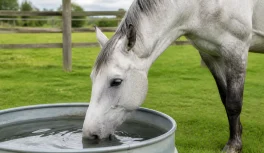
Water — technically not a nutrient, but the most critical element in the equine diet. An adult horse consumes between 6 and 14 gallons per day depending on climate, activity level, and diet composition.
The Foundation of the Diet: Forage First
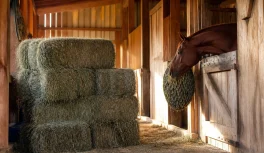
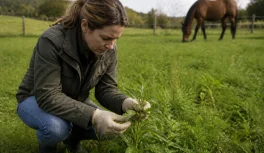
Regardless of life stage or workload, forage — hay, pasture, or haylage — must constitute the base of the equine diet. The reason is physiological: the horse’s digestive tract was shaped by evolution to process long-stem fiber continuously. A horse in the wild grazes for 16 to 18 hours a day, ingesting small amounts constantly.
When that continuity is disrupted — by prolonged periods without forage access, widely spaced meals, or diets with excess concentrate — stomach pH drops sharply, increasing the risk of gastric ulcers. Studies indicate that more than 60% of horses in competitive training show some degree of gastric ulceration, much of it tied to feeding management failures.
The general recommendation is to provide forage free-choice or at least 1.5% of body weight in dry forage matter per day. For a 1,100-pound horse, that is at least 16 pounds of dry matter — the equivalent of roughly 18–20 pounds of hay at 15% moisture.
How Work Changes Energy Requirements
Activity level is the single factor that most alters a horse’s caloric needs. The general classification divides work into four levels:
Light work (1–3 hours per week of low-intensity exercise) — the increase in energy required above maintenance is approximately 20–25%. Often covered by quality forage alone.
Moderate work (3–5 hours per week at medium intensity — basic dressage, recreational jumping, long trail rides) — a 40–50% increase above maintenance. Usually requires concentrate supplementation.
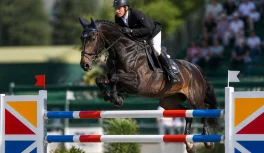
Intense work (5–7 hours per week at high intensity — competition, polo, racing, endurance) — a 65–90% increase. The diet needs to be precisely calculated; underestimation leads to declining performance and loss of muscle mass.
Very intense work (elite competition, racing) — may double or triple maintenance energy needs. Nutritional management at this level requires oversight from a veterinarian or equine nutritionist.
Nutrition at Different Life Stages
Feeding Foals from Birth to Weaning
In the first days of life, the mare’s colostrum is irreplaceable — it provides essential antibodies for the foal’s passive immunity. After the first week, mare’s milk meets all nutritional needs. Between 2 and 4 weeks of age, the foal begins exploring the mare’s concentrate — normal and beneficial for gut microbiome development.
From 2–3 months, the foal should have access to a creep feed — a concentrate specifically formulated for nursing foals, with high protein (16–18%) and good calcium and phosphorus supply. Weaning typically occurs between 4 and 6 months.
Growing Youngsters: The Most Critical Phase
Between weaning and 2 years of age, the horse undergoes its most rapid growth — and consequently the phase most vulnerable to nutritional errors. Excess energy during this period is directly associated with DOD (Developmental Orthopedic Disease) — a group of bone problems including osteochondrosis, subchondral cysts, and angular limb deformities.
The practical rule: growing foals should be maintained with a body condition score between 5 and 6 (on the 1–9 Henneke scale) — never too thin, never obese. Quality protein matters more than energy quantity.
The Pregnant Mare: Trimester by Trimester
During the first two-thirds of gestation, the mare’s nutritional needs are very close to those of an adult horse in light maintenance. Fetal growth is slow in this phase.
In the last trimester — especially the final two months — the fetus grows rapidly and requirements for energy, protein, calcium, and phosphorus increase significantly. The mare should enter foaling with a body condition score between 5 and 7 — a mare that is too thin at foaling will struggle to sustain lactation.
The Lactating Mare: Peak Nutritional Demand
Lactation is the period of greatest nutritional demand in a mare’s life. A mare produces between 2.5 and 4 gallons of milk per day in the first weeks, and each gallon of milk represents energy, protein, calcium, and phosphorus drawn directly from her diet. A mare in peak lactation needs 60–80% more energy than at maintenance.
Senior Horses: Less Efficient Digestion
From around age 20, many horses show reduced digestive efficiency, progressive tooth loss, and difficulty maintaining weight. Their nutritional requirements do not decrease — the challenge is absorption. Easily digestible hays, pelleted concentrates, and in advanced cases fully soaked diets are common strategies in senior horse management.
How to Assess Body Condition and Adjust the Diet
The Henneke Body Condition Score (BCS) is the most practical tool for evaluating whether the diet is working. The scale runs from 1 (extremely thin) to 9 (extremely obese). The ideal for most adult horses in moderate work is between 5 and 6.
The assessment considers fat deposits in six areas: neck, withers, ribs, back, tailhead, and behind the shoulder. A horse with BCS 5 has dorsal spinous processes that are slightly palpable, ribs easily felt but not visible, and a slight fat deposit over the back.
Adjust the diet by BCS, not just by weight. Two horses of equal weight can have completely different body compositions — and correspondingly different nutritional needs.
Most Common Equine Nutrition Mistakes
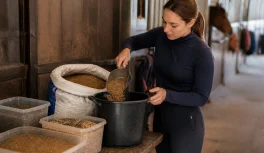
Too much concentrate, too little forage — the most frequent cause of digestive problems, including colic and gastric ulcers.
Abrupt diet changes — the equine gut microbiome takes 2 to 3 weeks to adapt to a new feed source. Abrupt changes disrupt this microbial community and increase the risk of diarrhea and colic.
Underestimating the role of water — dehydrated horses have compromised digestion, reduced performance, and increased risk of impaction.
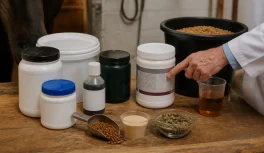
Supplementing without diagnosis — supplementing minerals without forage analysis and, ideally, blood work can create imbalances — excess iron, for example, interferes with the absorption of copper and zinc.
Ignoring seasonal variation — in cold climates, horses need more energy in winter for body temperature maintenance. In intense heat, water intake increases and palatability of some feeds drops.
Diet as a Preventive Health Tool
More than meeting basic needs, a well-formulated diet is an active prevention tool. Well-nourished horses have more robust immune systems, healthier coats, faster muscle recovery, lower incidence of joint problems, and better response to training.
Investing in a consultation with an equine nutritionist or veterinarian with nutrition expertise — especially for high-performance animals, breeding mares, or horses with special health conditions — is one of the highest-return expenditures in any equine operation.