Few moments in horse breeding match the rush of watching a foal stand for the first time. But before that instant comes months of planning, technical knowledge, and constant attention — starting long before the breeding itself. Equine reproduction is one of the most sophisticated areas of animal science, and at the same time one of the most accessible for those who commit to learning it.
This guide walks through the complete cycle: from mare physiology to available biotechnologies, through gestation, foaling, and the foal’s first days. The goal is to give every breeder — experienced or just starting out — a clear, practical picture of each step.
The Biology of Equine Reproduction
Horses are seasonally polyestrous animals. This means that a mare’s reproductive activity varies throughout the year according to photoperiod — the length of daylight. In temperate climates, mares enter anestrus (a period of sexual inactivity) during winter, when days are short, and resume regular cycles in spring as daylight lengthens.
In tropical and equatorial regions, this seasonality is less pronounced. Mares bred near the equator may cycle relatively regularly for much of the year, though fertility still fluctuates with light and temperature variation.
Stallions are fertile year-round, but semen quality — concentration, motility, morphology — also improves during months of longer natural daylight.
Understanding this biological rhythm is the first step to planning a breeding season with intelligence.
The Mare’s Estrous Cycle
A cycling mare in full reproductive activity has estrous cycles averaging 21 days, with normal variation between 18 and 24 days. The cycle is governed by a hormonal sequence coordinated between the hypothalamus, pituitary gland, and ovaries.
The cycle divides into two main phases:
Estrus (heat): the phase when the mare accepts the stallion. It lasts an average of 5 to 7 days, though it can range from 3 to 10 days — especially during seasonal transitions. During estrus, the dominant follicle grows progressively on the ovary and culminates in ovulation, typically one or two days before estrus ends.
Diestrus: the post-ovulatory phase, lasting an average of 14 to 16 days. The corpus luteum forms at the ovulation site and produces progesterone, a hormone that suppresses new cycles and prepares the endometrium for a possible pregnancy. Without conception, endogenous prostaglandin destroys the corpus luteum, progesterone drops, and a new cycle begins.
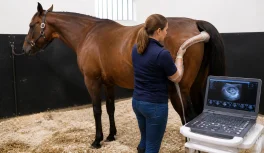
Precisely identifying heat and the timing of ovulation is fundamental to maximizing conception rates, whether by live cover or artificial insemination. Transrectal ultrasound is the standard tool for monitoring follicular development and estimating ovulation with reliable accuracy.
Breeding Methods
Modern horse production offers three main approaches, each with a different level of technology, cost, and outcome:
Live Cover
Direct breeding remains the simplest and most economical method. The stallion and mare meet in a controlled environment, supervised by the breeding team, at the right moment in the cycle. Live cover produces good conception rates when properly managed, but it imposes geographic limitations — mare and stallion must be in the same location — and carries a higher risk of reproductive disease transmission.
Artificial Insemination (AI)
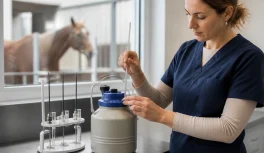
Artificial insemination transformed equine reproduction. It allows a high-value stallion to breed dozens of mares in a single cycle regardless of geography. Semen can be used fresh (immediately after collection), chilled (shipped within 48 hours), or frozen (stored for years in liquid nitrogen).
Chilled semen AI is currently the most common method in professionally managed operations. It combines solid conception rates with practical logistics for most breeding programs.
Embryo Transfer (ET)
Embryo transfer allows a high-value donor mare to produce multiple foals in a single year — she supplies the embryo, which is transferred to recipient mares who carry the pregnancy to term. A good donor respondent can generate 6 to 12 embryos per breeding season.
ET requires laboratory infrastructure and a specialized team, but it is widely used for high-commercial-value breeds worldwide.
Planning the Breeding Season
At professional operations, the breeding season — the period when matings are concentrated — is planned months in advance. The goal is to time foalings strategically, ensuring that foals born are developed enough for the selection trials of their respective breeds.
For sport horse breeds with international regulation, age cutoff dates are often based on the calendar year — all foals born that year count as the same “generation” regardless of birth month. This pushes breeders to concentrate foalings as early in the season as possible.
For working and stock breeds, the calendar reflects the breeder’s preferences and local climate and forage conditions — targeting foalings when grass is good and conditions are favorable.
Before the season starts, a reproductive soundness exam for both parents is strongly recommended: fertility evaluation of the mare (reproductive history, uterine ultrasound, bacterial culture) and an andrology exam for the stallion (semen evaluation: motility, morphology, concentration).
Gestation
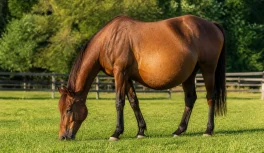
A mare’s gestation averages 340 days — roughly 11 months and a week — with normal variation from 320 to 360 days. Mares tend to carry colts slightly longer than fillies, though the difference is small and variable.
During gestation, the mare’s management doesn’t need to change dramatically, especially in the first trimester. Moderate exercise is beneficial well into pregnancy. Nutritional demands increase during the final trimester as the fetus grows rapidly — that is when energy, protein, calcium, and phosphorus requirements rise significantly.
Periodic veterinary monitoring — with ultrasound to confirm fetal viability and early diagnosis of potential problems — is recommended for valuable mares or those with a history of pregnancy loss.
Foaling
Equine foaling is fast and intense. Unlike most species, the placenta begins detaching shortly after membrane rupture, which means the foal must be delivered quickly once active labor begins. In most normal foalings, the entire expulsive phase — from membrane rupture to birth — takes under 30 minutes. Any delay beyond that is a warning sign.
The window of intensive monitoring begins with wax or streaming of milk from the teats, a sign that typically precedes foaling by 24 to 48 hours. Other signs include softening of the muscles around the tail and swelling and relaxation of the vulva.
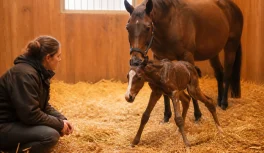
In the vast majority of cases, the mare foals without human intervention. The breeder’s role is to monitor, intervene quickly in case of dystocia, and ensure the foal receives colostrum within the first few hours — the critical window for passive immunity transfer.
The Foal’s First Days
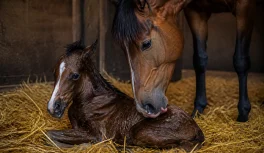
The first 24 hours of a foal’s life are the most critical. Three benchmarks are closely watched by the breeding team:
Standing: the foal should stand within 1 hour of birth. Persistent difficulty is an indication for veterinary evaluation.
First nursing: should occur within 2 hours. Colostrum is irreplaceable — it contains antibodies the foal cannot yet produce on its own. The intestinal window for absorbing those antibodies closes between 12 and 24 hours after birth.
Passing meconium: the first stool should pass within 3 hours. Meconium retention is a common cause of neonatal colic and may require veterinary intervention.
Any significant delay in these benchmarks warrants immediate evaluation.
Expanding Biotechnologies
Equine reproduction continues to advance rapidly. Beyond classic embryo transfer, techniques such as oocyte aspiration (OPU) followed by intracytoplasmic sperm injection (ICSI) allow foals to be produced from mares that could never be bred naturally — whether due to advanced age, serious orthopedic injury, or even death. Semen from stallions who died decades ago, preserved as frozen doses, continues to produce foals today.
Equine genomics — genome sequencing to identify variants associated with performance, health, and physical traits — is beginning to influence breeding decisions at leading operations. These tools are expected to become progressively more accessible in the years ahead.
Where to Start
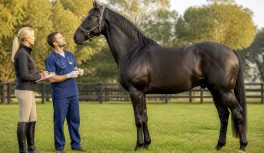
For breeders taking their first steps in equine reproduction, the practical recommendation is direct: invest in knowledge before investing in technology. A veterinarian who specializes in equine reproduction is the most valuable partner in this journey. Good basic management — recognizing heat, proper nutrition, a safe foaling environment — is enough to produce consistent results in the great majority of cases.
Technology amplifies what’s already working. It doesn’t replace the breeder’s attentive eye.