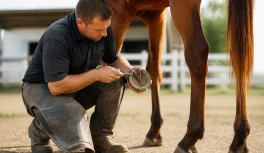
There is something almost anachronistic about the scene: the person in a leather apron bent over a horse’s leg, hammer in hand, nailing metal to the hoof with a precision that impresses anyone watching for the first time. In a world of automation and accelerating obsolescence, the horse farrier is one of the rare trades that time has not managed to replace.
And for a simple reason: every horse’s hoof is unique. No machine does what an experienced farrier does when heating steel, studying the animal’s gait, and shaping the metal to the specific geometry of that limb.
Who Is the Farrier?
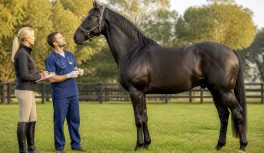
The farrier — known as a mariscal in some Spanish-speaking regions, or a maréchal-ferrant in French — is the professional responsible for equine hoof care. The work goes far beyond nailing shoes: the farrier evaluates limb conformation, the balance of the horse’s bearing, the health of the hoof capsule, and decides — together with the veterinarian when necessary — what intervention each animal needs.
A skilled farrier is part craftsperson, part equine health technician. The work demands knowledge of equine anatomy, limb biomechanics, basic metallurgy, and the manual dexterity to work with animals that rarely stay completely still.
Is the Farrier a Veterinarian?
No — but the scope of the work overlaps in certain contexts. Farriers do not prescribe medications or make formal clinical diagnoses. But they are often the first to notice signs of limb problems: the altered angle that suggests inflammation in the digital cushion, the hoof wall growing abnormally, the frog showing signs of infection.
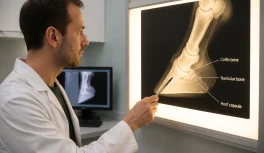
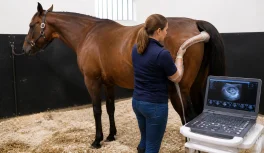
In complex cases — laminitis, navicular syndrome, hoof abscesses, congenital deformities — the farrier and the veterinarian work together. The farrier performs hoof interventions; the veterinarian diagnoses, treats the clinical condition, and guides the orthopedic approach.
How Does a Farrier Train?
Training varies considerably by country and local equestrian tradition.
Apprenticeship: in many countries with a strong equestrian tradition — the United Kingdom, Ireland, the United States, Australia — the classic training path involves years of working alongside an experienced farrier as an apprentice. Knowledge is passed on directly through daily practice. This tradition persists and still produces excellent professionals.
Schools and technical programs: throughout the twentieth century, specialized farriery schools emerged in various countries. In the United States, the American Farriers Association (AFA) establishes internationally recognized certification standards. In the United Kingdom, the Worshipful Company of Farriers maintains a qualification system with nearly 700 years of history. In Brazil, institutions such as SENAR and some universities with veterinary medicine programs offer farriery training courses.
International certifications: for professionals who want to work at the highest levels — particularly with international competition horses — certifications such as CJF (Certified Journeyman Farrier) or CF (Certified Farrier) from the AFA serve as important benchmarks.
What Tools Does a Farrier Use?
A professional farrier’s tool kit is extensive and highly specific. The main ones:
Forge: the heart of hot-shoeing work. The forge — which can be coal-fired, gas, or electric — heats metal to temperatures between 1,450 and 1,800°F (800–1,000°C), making it malleable for shaping.
Anvil: the metal base on which the farrier hammers and shapes the shoe. Anvils come in different sizes and horn shapes for different types of work.
Hammers: the farrier uses at least two types — the turning hammer for anvil work and the driving hammer for nailing shoes to the hoof.
Clinchers and hoof nippers: for removing the old shoe and cutting nails.
Hoof knife and rasp: for preparing the hoof surface before the shoe is applied.
Horseshoe nails: the specialized nails with a specific geometry that fix the shoe to the hoof wall without penetrating live tissue.
Clinch block and file: for bending and smoothing the nail ends that emerge through the hoof wall after driving.
What Does a Farrier’s Day Look Like?
The daily routine is physically demanding. Farriers spend hours bent or crouched, holding the limbs of animals that weigh between 880 and 1,320 pounds (400–600 kg), in environments ranging from climate-controlled stables to open corrals under a summer sun.
Most farriers work as itinerant professionals — traveling from farm to farm with their equipment. Some work exclusively at large equestrian centers or racetracks, where they have a permanent base.
Demand for qualified farriers tends to be stable or growing in markets with strong equestrian activity. It is a trade that provides a solid income for those who reach a high technical level — especially those who specialize in orthopedic shoeing or work with high-performance horses.
How Much Do Farriers Earn?
Earnings vary greatly by region and level of specialization. In developed equestrian markets such as the United States, Australia, and Europe, experienced farriers are among the best-paid professionals in the equine industry — with annual income that can exceed that of general practice veterinarians in some areas.
What Separates an Exceptional Farrier From a Mediocre One?
The difference is not only in technique — it is in observation. An exceptional farrier arrives at a property and, before picking up a hammer, is already watching how the horse moves, where it places its weight, what its resting posture looks like. The farrier reads the hoof like a text that tells the story of that limb.
Some quality indicators owners can evaluate:
Time per horse: good shoeing is not fast. A professional who completes four hooves in 20 minutes is likely cutting steps.
Conversation before starting: the farrier who asks about changes in the horse’s workload, its problem history, the owner’s observations, is building a clinical picture — not just nailing iron.
Visual result: a well-shod hoof has the limb angle properly aligned, the shoes symmetric and well-fitted to the hoof contour, the nail clinches bent in a clean line.
Documentation: the best professionals keep records of the work done on each animal — angles measured, observations noted, comparisons between sessions. It is rare, but it exists.
The Farrier in the Modern World
Digitalization has reached the trade: video-based gait analysis apps, 3D hoof scanners, real-time communication tools with veterinarians. The modern farrier who embraces these technologies can offer a level of precision that would have been impossible a generation ago.
But the core of the work remains manual. The forge, the anvil, the hammer — and the ability to feel, with the hand that holds the limb, what the animal is communicating. That is the craft that has survived for centuries and has no replacement in sight.