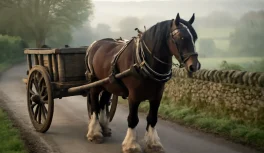
When you talk about Clydesdale coat colors, you’re talking about far more than a simple palette of shades. In this breed, color interacts with the leg feathering, the white face and leg markings, and the naturally glossy coat texture to produce visual combinations that are genuinely hard to walk past without stopping. Understanding Clydesdale coat colors means understanding a significant part of what makes this breed so visually striking — and it matters both for show evaluation and for breeding decisions.
The Most Common Coats in the Breed
The Clydesdale isn’t a one-color breed. Unlike some breeds that produce a single dominant color, Clydesdales come in a meaningful range — though some coats are considerably more common than others.
Bay – a common clydesdale coat color
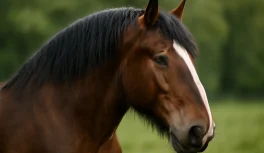
Bay is one of the Clydesdale’s most common coat colors. The body coat ranges from light golden to deep reddish-brown, with black mane, tail, and leg points. The combination creates a naturally elegant contrast.
In Clydesdales, bay takes on an extra dimension because the white leg markings — standard across most individuals in the breed — contrast against both the dark lower leg and the feathering. The layered visual effect is particularly striking in the show ring.
Roan
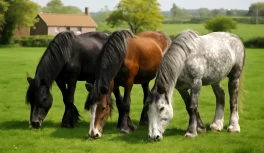
Roan may be the most visually complex coat in the Clydesdale. It’s produced by white hairs interspersed throughout a base color — brown, black, or bay — creating a depth and texture that shifts in different lighting: sometimes silvery, sometimes copper, sometimes with a blue-gray cast.
Roan Clydesdales are highly valued in competition precisely because the coat gives the impression of movement even when the horse is standing still. Bay roan (also called red roan) is the most common; blue roan — with a black base — is rarer and very sought after.
Brown (Dark Bay)
Brown, or dark bay, is frequently seen in the Clydesdale. The body coat is medium to dark brown, with leg points typically darker or nearly black. It’s a solid, rich color that in some individuals is so dark it can be mistaken for black at first glance.
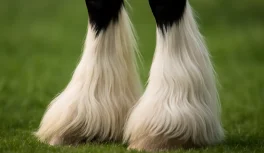
In brown Clydesdales with heavy white feathering on the legs, the contrast is particularly dramatic: the dark body against white leg fringes creates an almost theatrical visual.
Black
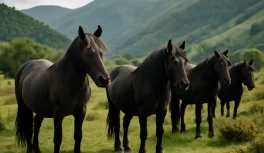
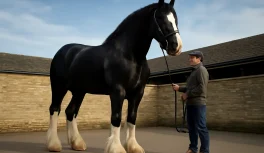
True black in the Clydesdale is less common than in light horse breeds, but it exists. Individuals with fully black coats — no sun-bleached flanks or muzzle — are visually imposing and well received in shows.
A black Clydesdale with abundant feathering is a spectacle all its own: the total dark coat set against white face and leg markings produces an extremely dramatic, high-impact visual.
Gray
Gray is rare in the Clydesdale, but not absent. Gray horses are born dark and lighten progressively with age — a gray Clydesdale foal may look almost black and gradually become nearly white over a decade. In a breed where feathering is central to the aesthetic, a gray horse with white leg fringes has an ethereal, uncommon look that draws immediate attention.
White Markings: The Detail That Defines the Breed
If there’s one element that unifies most Clydesdales beyond the feathering, it’s white markings. Unlike many large breeds where markings are minimal, in the Clydesdale they are the norm — and the more generous the markings, the more valued the horse tends to be in competitive contexts.
Face Markings
- Star — a white spot on the forehead, variable in size
- Stripe — a narrow white line running down the nose
- Blaze — a wider white stripe covering most of the nose
- White face — broad white coverage from forehead to muzzle, very common in the breed
Leg Markings
- Sock — white covering the hoof and pastern area
- Half stocking — white reaching mid-cannon
- Stocking — white rising above the knee or hock
- Full white legs — very common in Clydesdales, especially the hind legs
White leg markings interact directly with feathering: when white feathering falls over a white leg, the effect is a seamless, flowing cascade; when white feathering contrasts against dark lower leg hair, the result is a dramatic layered contrast that photographs beautifully and commands attention in the ring.
Color and the Show Ring
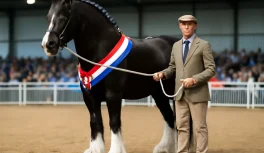
At Clydesdale shows, coat color isn’t the primary judging criterion — conformation, feathering quality, movement, and overall breed type carry more weight. However, coat color influences the overall visual impression the horse makes.
High-contrast coats (dark bay with white legs, black with bold markings, blue roan) simply attract more attention from judges and spectators. That’s not arbitrary — a show horse needs presence, and a striking coat contributes to that presence.
The Clydesdale Horse Society registers all the colors described here. No disqualification applies based on coat color — only conformation and breed type criteria are determinative.
Clydesdale Coat Color Genetics: What Breeders Should Know
For breeders planning matings with coat color in mind, some basic equine color genetics apply to the Clydesdale:
Roan is controlled by an incomplete dominant gene: a horse with at least one roan allele will be roan. Two roans can produce non-roan offspring, but two non-roans will never produce a roan foal.
Gray is also dominant: a gray horse always has at least one gray parent. Because gray is rare in the Clydesdale, finding gray breeding stock with strong breed type is both difficult and valued.
Black in the Clydesdale, as in other breeds, is recessive to bay. Two bay parents can produce a black foal if both carry the recessive extension allele.
These color gene interactions, combined with the separate and independent inheritance of white markings, mean that each Clydesdale foal is genuinely a visual surprise — even among full siblings from the same bloodlines.
Why Coat Color Matters Beyond Aesthetics
Beyond visual impact, coat and white markings have practical implications that owners often underestimate.
Horses with extensive white lower leg markings — especially in the feathering — are more susceptible to a skin condition called “scratches” or “mud fever” (cleft disease in draft breeds), because lighter, finer hair retains more moisture. Prevention requires more rigorous hygiene and careful drying after exposure to rain or wet ground.
White face markings also call for extra attention to sun protection, especially in horses with significant outdoor time. The pink skin beneath white hair is more vulnerable to sunburn than pigmented skin beneath a dark coat.
Small details in the daily routine, but ones that make a meaningful long-term difference to the health of the skin and coat.